Last updated November 23, 2026
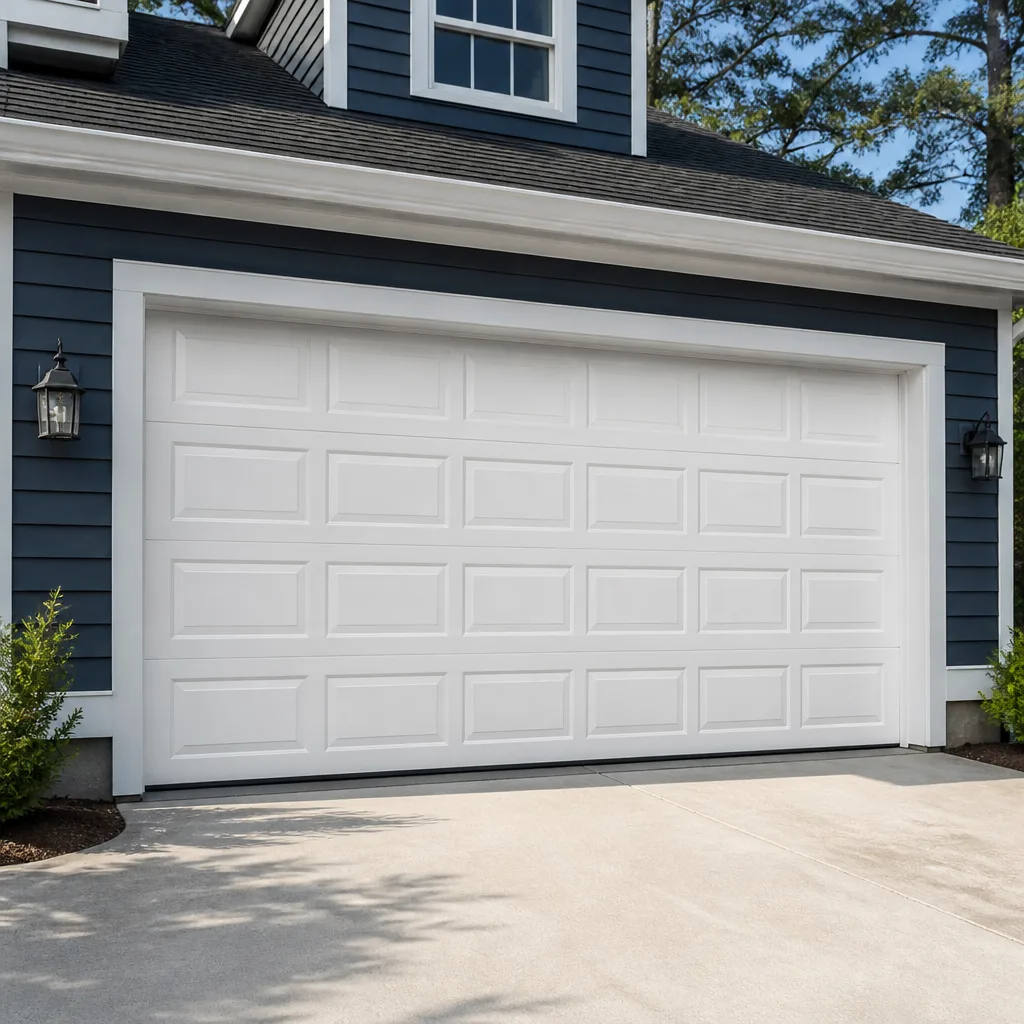 Raised-panel steel
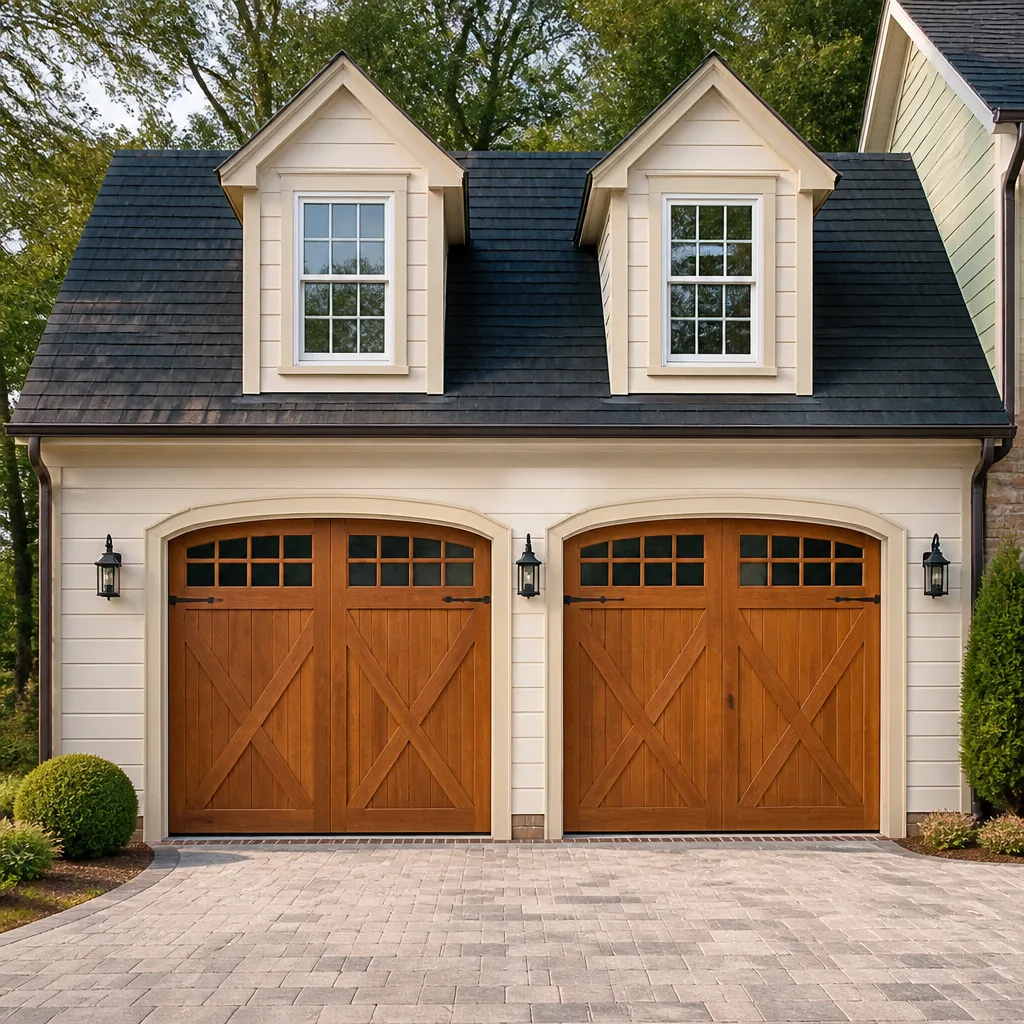 Carriage house
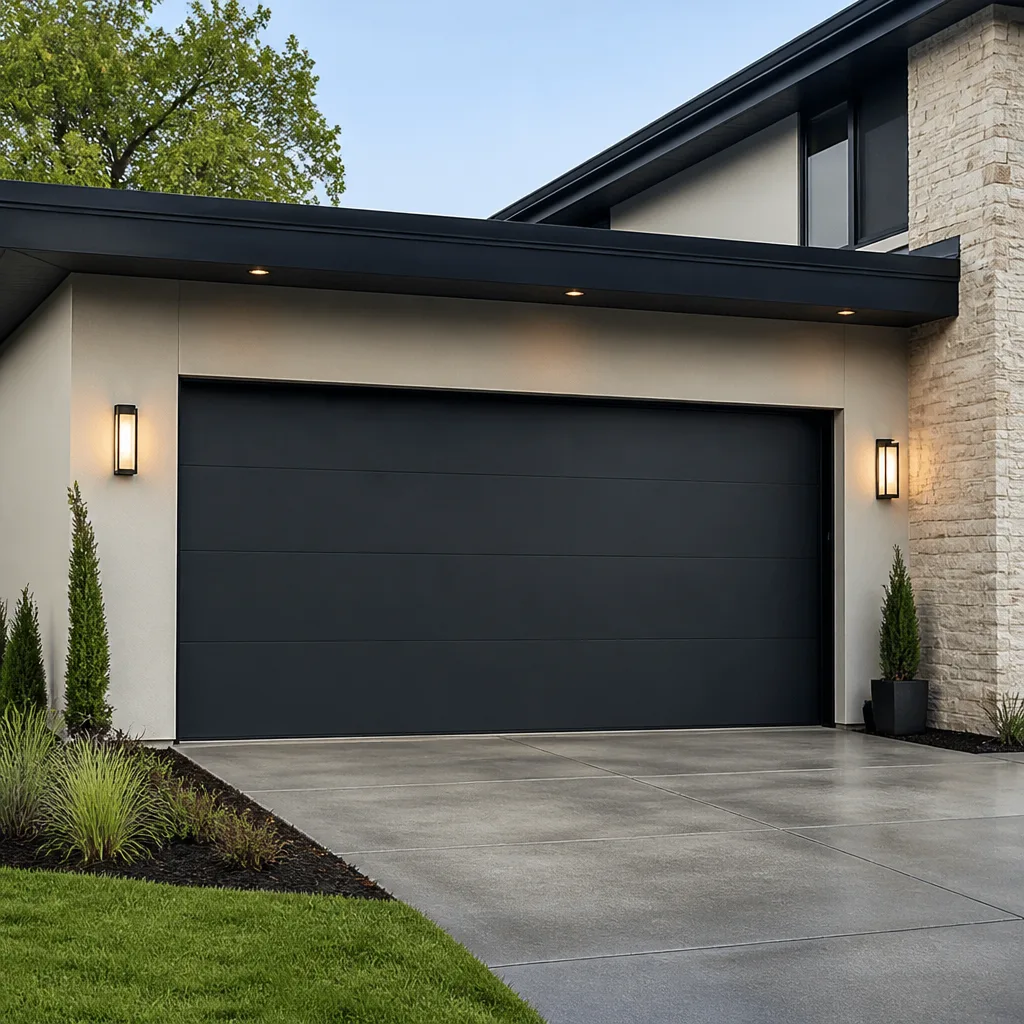 Modern flush
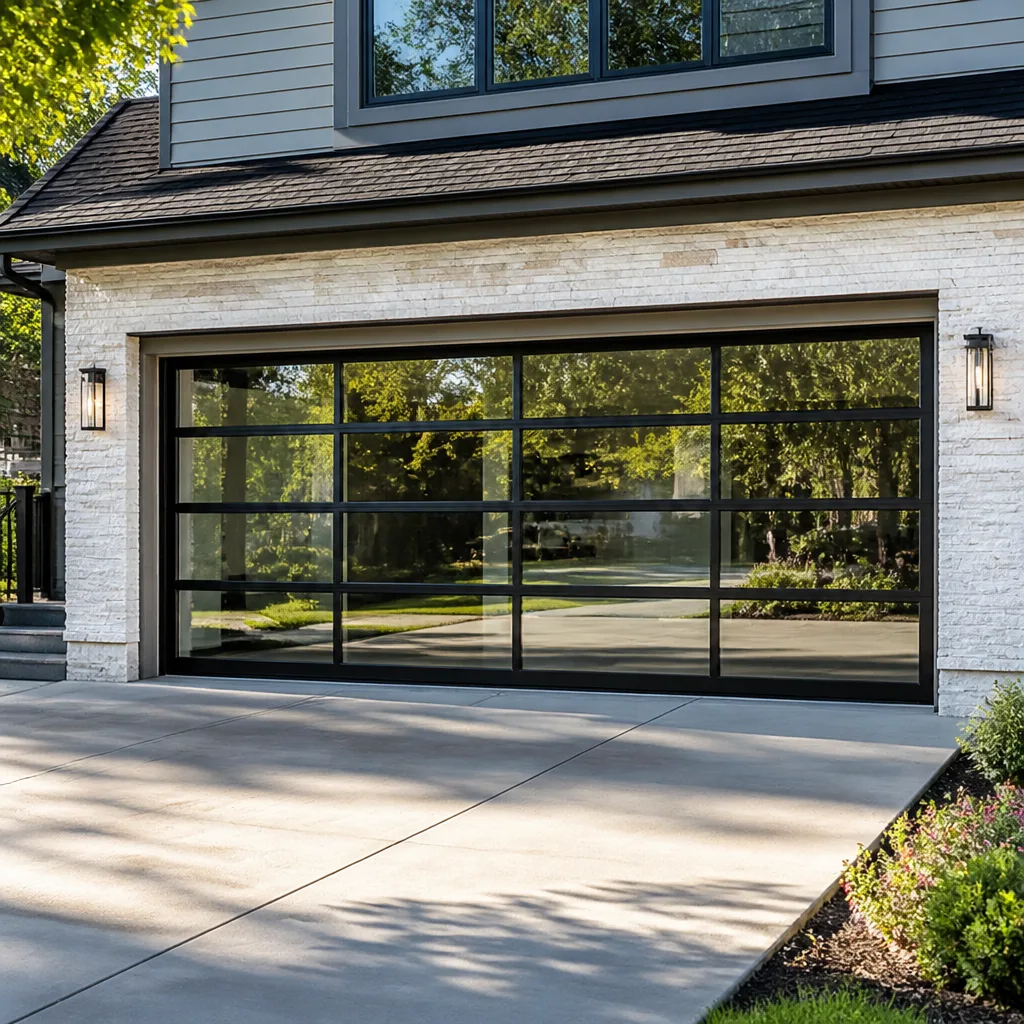 Full-view glass
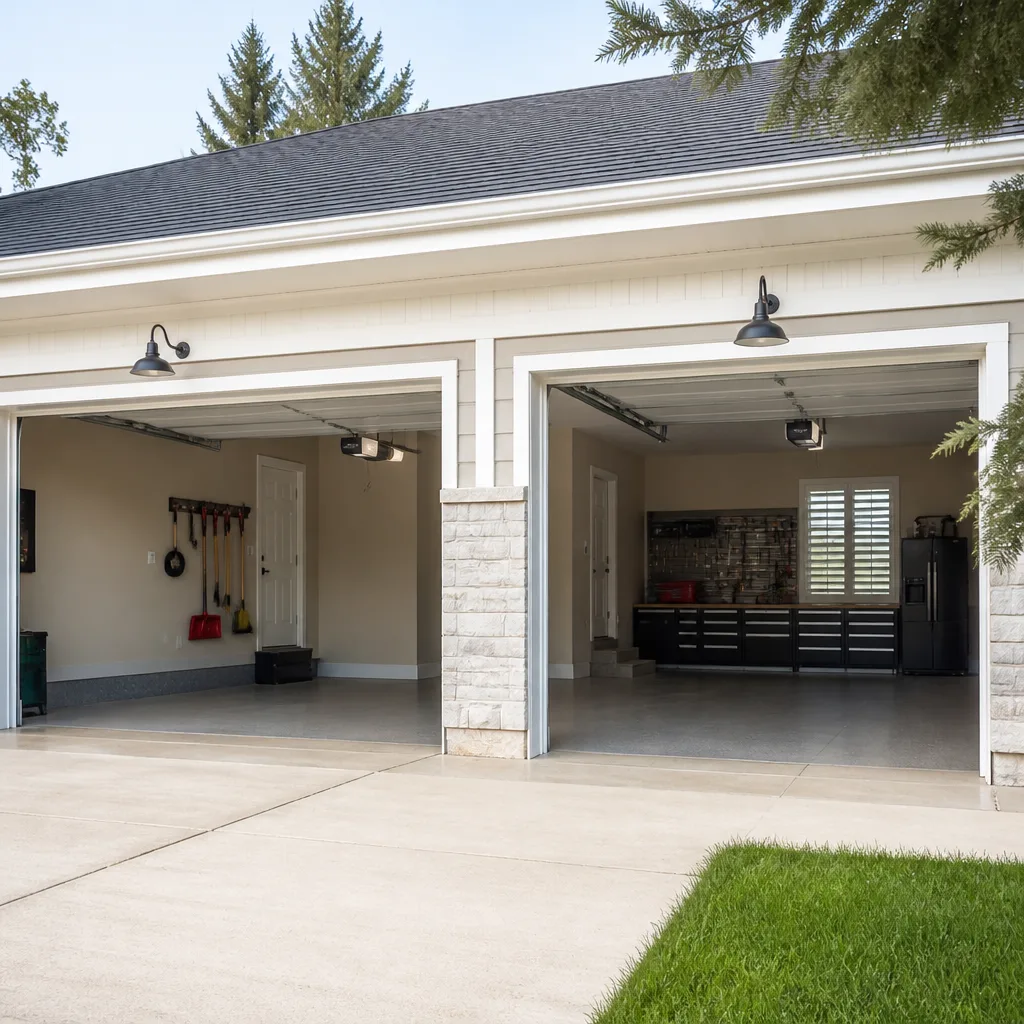 LiftMaster openers
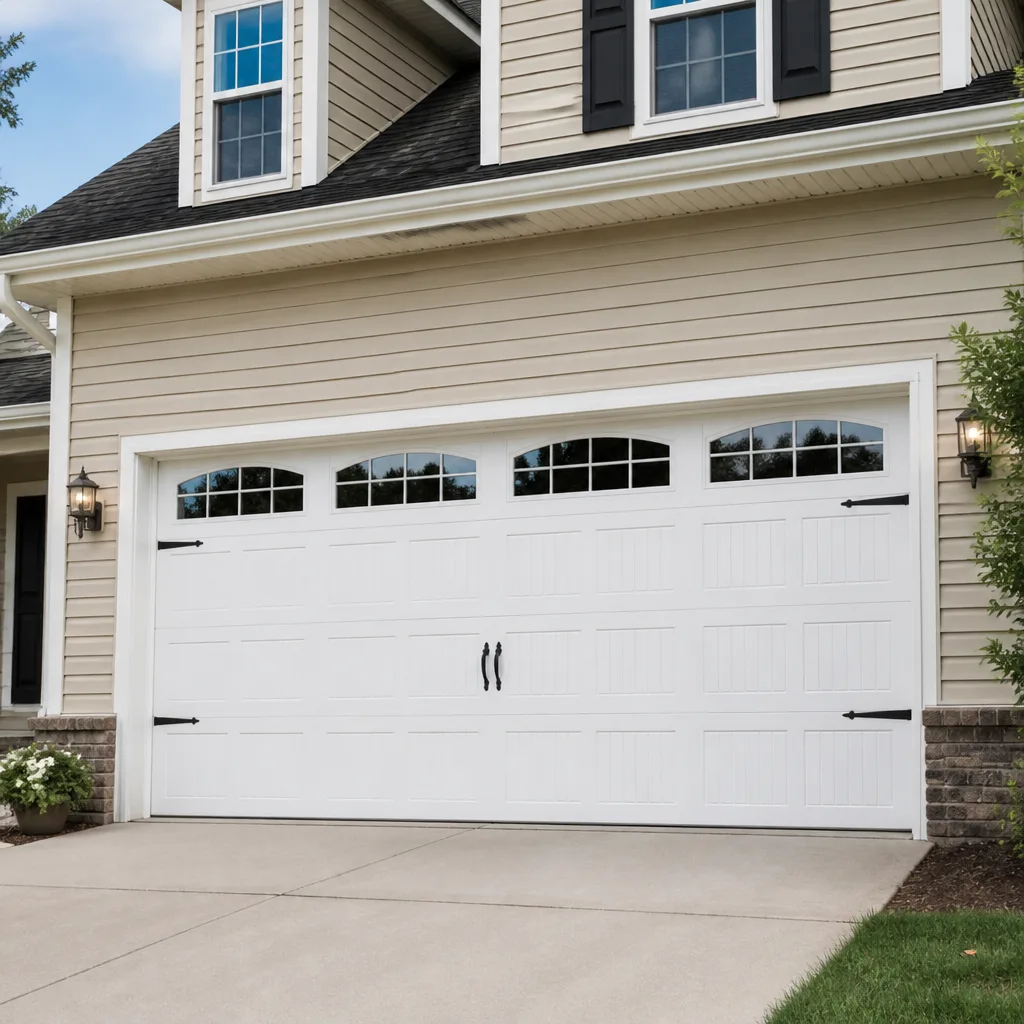 Chamberlain openers
Full 25-point door and opener safety check with every visit - springs, cables, rollers, tracks, and your LiftMaster or Chamberlain opener included
You get a price before we start. It does not change when the pro arrives.
Get your free estimateGarage Door Warning Signs: A Bevo Mill Homeowner’s Reference Guide
Most homeowners treat every garage door symptom the same way: they wait, then they worry. That’s the wrong order. A grinding noise can mean three completely different things, and two of them are fine to operate through while the third means a cable is about to snap. The difference isn’t the volume of the sound or how scary it feels. It’s which component is producing it and what that component does when it fails. This guide sorts the warning signs you’re most likely to notice in a Bevo Mill garage into three urgency tiers, maps specific sounds and visuals to specific parts, and shows you a 60-second balance test you can run yourself. By the end, you’ll know whether to keep using the door, book a repair this week, or stop and call.
Quick Answer
Garage door warning signs fall into three urgency tiers. Stop using the door immediately if you hear a loud bang followed by a slack door, see a snapped or hanging cable, or notice a door that closes crooked and won’t reverse. Schedule service within a week for grinding, popping, slow reversal, or a door that drifts down on its own. Monitor and maintain for light squealing, minor vibration, or a single loose hinge. When in doubt, the balance test below settles it in under a minute.
Styles & brands we work with
- Raised-panel steel
- Carriage house
- Modern flush
- Full-view glass
- LiftMaster openers
- Chamberlain openers
Table of Contents
- The Three-Tier Urgency System: What’s Ignorable, What’s Urgent
- What Each Sound Tells You: Grinding, Popping, Squealing, and Banging
- The Visual Signs Most Homeowners Miss
- The 60-Second Balance Test and What It Reveals
- Age-Related Wear vs. Impact Damage vs. Installation Errors
- Opener Warning Signs: When the Motor Is the Problem
- Why Bevo Mill Garages Show These Signs Differently
- Seasonal Checks for a Bevo Mill Garage
The Three-Tier Urgency System: What’s Ignorable, What’s Urgent
Before you read a single symptom, understand the framework. Every garage door problem you’ll encounter sits in one of three tiers. Getting the tier right is the whole game. Panic over a tier-three squeak wastes money. Ignoring a tier-one cable turns a repair into a replacement, or worse, an injury.
Tier 1: Stop using the door today. These signs mean a component is holding stored energy and is about to release it in the wrong direction. Springs, cables, and torsion hardware live here. A door in tier one should be left down and left alone until a technician sees it.
- A loud bang from the garage followed by a door that suddenly feels extremely heavy
- A visibly broken spring (a gap in the coil) or a cable hanging loose or coiled off its drum
- A door that comes down crooked, with one side higher than the other, and won’t reverse
- Any grinding or snapping sound coming directly from the torsion bar on the wall above the door
Tier 2: Schedule within a week. The door still works, but something is wearing faster than it should. Left alone, these become tier-one problems.
- Grinding that rises and falls as the door travels up or down
- A popping or cracking sound as the door begins to move
- The door reverses slowly, or only after nearly touching the floor
- The door drifts down a few inches on its own when you let go halfway up
- An opener motor that strains, hums, and barely moves the door
Tier 3: Monitor and maintain. Cosmetic or maintenance-level. Handle these yourself with lubrication and a screwdriver.
- Light squealing or chirping that quiets after lubrication
- Minor vibration that doesn’t worsen over weeks
- A single loose hinge, roller, or bracket bolt
- Weatherstripping that’s torn or stiff but the door still seals
We’ve walked Bevo Mill homeowners through this triage on the phone many times. The pattern holds: the sound that scares people most is often tier two, and the one they dismiss is often tier one.
What Each Sound Tells You: Grinding, Popping, Squealing, and Banging
Your ears are the fastest diagnostic tool you have. Four sounds cover most garage door failures, and each points to a different component.
Grinding
Grinding is the ambiguously dangerous one. It has three common sources. Dry, worn metal rollers grinding against a dry track is tier three. A torsion tube whose bearings have run dry is tier two. But grinding that comes from the torsion bar itself, especially when paired with the door moving unevenly, can mean a cable is fraying on its drum and is about to snap. If the grinding is loud, metallic, and localized to the wall above the door, stop and call. If it’s a dry, scraping sound from the tracks, lubricate and recheck in a few days.
Popping or Cracking
A single pop when the door starts moving usually comes from the torsion spring or the hinges. Hinges that pop are tier three and worth tightening. A pop from the spring assembly as tension releases unevenly is tier two and worth scheduling. Popping that repeats throughout the travel of the door suggests the spring is binding or the door is out of balance, which brings us to the balance test below.
Squealing or Squeaking
Almost always lubrication. Hinges, rollers, and the torsion bearings dry out and squeal. Treat it as maintenance. Coat the hinge knuckles and roller stems with a proper garage door lubricant, not WD-40, and recheck in a week. If the squealing returns fast, you may have a worn roller or a hinge that needs replacing.
Banging
A single loud bang that sounds like a shot is the classic sound of a spring breaking. It’s tier one. The door will suddenly feel much heavier than it did yesterday. Do not try to lift it. Call for garage door repair and leave the door down. A softer banging as the door moves is usually loose hardware or a door out of balance, which is tier two.
The Visual Signs Most Homeowners Miss
Sounds are obvious. Visuals hide. Here’s what to look for on a walk-around, in order from the easiest to spot to the ones that require a deliberate look.
- Side-to-side gap at the bottom. Stand inside the garage with the door down and look at the line where the door meets the floor. If one side shows daylight and the other doesn’t, the door is out of balance or a spring has lost tension. That’s tier two, and it usually gets worse.
- Lean in the door. Walk back ten paces and sight along the horizontal lines of the panels. A subtle tilt toward one side means the cables aren’t carrying equal tension. This is easy to miss from close up.
- Gap at the top of the door. With the door down, check whether the top panel sits evenly against the header. A sudden change in the top gap after a hard close usually means a bent track or a shifted bracket.
- Slow reversal on close. Test this by placing a roll of paper towels in the door’s path and closing it. A healthy door reverses on contact. A door that presses the object nearly flat before reversing is tier two and often points to a strained spring or a miscalibrated opener.
- Uneven spring coils. With the door closed, look at the torsion spring above the door or the extension springs along the sides. Fresh gaps between coils, a stretched coil, or an obviously broken spring are all red flags.
- Frayed cable at the drum. Look at the thin steel cables that run down each side. A few stray strands at the drum are an early warning. A frayed section with visible broken strands is close to failure.
Any of these on its own is worth a call. Two or more together, and you’re squarely in tier two and should schedule a visit this week. A visible gap in the spring coil or a frayed cable with broken strands is tier one.
The 60-Second Balance Test and What It Reveals
The balance test tells you whether your springs are still doing their job. It’s the single most useful check a Bevo Mill homeowner can run, and it takes under a minute.
- Close the door fully. Pull the manual release cord (the red handle) to disconnect the opener. The door is now hand-operated.
- Lift the door slowly by hand to about waist height. It should feel light and controlled. If it feels heavy or you need to shoulder it up, stop and let it down gently. That’s a spring problem, and it’s tier one or two depending on how heavy it feels.
- Let go at the halfway point. A balanced door stays roughly where you leave it. A door that drifts down on its own has springs that have lost tension.
- Lower it back to the floor and reconnect the opener by pushing the door until it clicks.
What the result means:
- Stays put at halfway. Springs are healthy. Whatever your other symptoms are, they’re tier three.
- Drifts down slowly. Springs have weakened. Tier two, schedule within a week, and stop using the automatic opener until it’s checked.
- Falls fast or won’t stay up at all. Springs are near failure. Tier one. Do not operate the door, even by hand, beyond lowering it safely.
- Feels heavy but the door seems otherwise fine. Could be a stretched spring, a failing opener, or a binding track. A technician can tell in person.
One safety caveat: do this test only if you’re comfortable lifting the door a few feet. Do not attempt to adjust, tension, or replace springs yourself. A wound torsion spring holds enough stored energy to cause serious injury in a fraction of a second. Spring work is not a homeowner task, and no amount of online instruction makes it one.
Age-Related Wear vs. Impact Damage vs. Installation Errors
Two doors can show the same symptom for three different reasons, and knowing which category you’re in changes what the fix looks like. In our experience in Bevo Mill, this distinction is where homeowners often misjudge cost before we arrive.
Age-Related Wear
Wear follows patterns. Springs sag evenly. Cables fray at the same spot on both sides. Rollers wear flat. A door showing even symptoms on both sides is usually a wear story, and the repair is straightforward: replace the worn components and reset the balance.
Impact Damage
Impact leaves a signature. One panel dented, one hinge bent, one roller popped out of its track, one cable kinked where nothing else is wrong. If your symptoms are lopsided, ask yourself what happened recently: a car bumper, a bicycle handlebar, a ladder that leaned on the door, a hard wind gust. Impact damage rarely becomes a whole-door replacement unless multiple panels are bent. It’s usually panel and hardware repair.
Installation Errors
Installation problems show up as chronic symptoms: a door that has never quite sat right at the floor, a constant lean toward one side, tracks that pop out of their brackets, or a door that reverses too quickly or too slowly since the day it was hung. These don’t worsen on their own; they just sit there causing low-grade trouble. If your garage door has behaved the same way from the day it went in, it needs an adjustment or a rehang, not a repair.
One sign points clearly to age and physical wear rather than anything else: a telltale gap in the torsion spring coil. Springs are rated for a certain number of cycles. Once they hit that number, they break, and the break is sudden. A matched pair should be replaced together since the second spring is almost certainly at the same cycle count. Never replace a single spring and leave the other to fail next month.
Opener Warning Signs: When the Motor Is the Problem
Not every warning sign is a door problem. Sometimes the motor is telling you it’s struggling, and the door is fine. If you have a Genie, Chamberlain, LiftMaster, or another common residential opener, these are the signals worth noticing.
- The opener hums but the door doesn’t move. The motor is running but the drive isn’t transferring. This is usually a stripped gear, a broken drive belt, or a stripped trolley. It’s garage door opener repair, not a spring replacement.
- The opener runs and the door moves slowly. Could be a failing capacitor, a weakening motor, or, more often, a door that has lost balance and is dragging the motor down. The balance test above will tell you which.
- The opener reverses on its own. Safety sensors misaligned, or a door binding in the track. Check that the sensors’ indicator lights are solid, not blinking, and clear any obstruction.
- The opener clicks but nothing runs. Usually a capacitor or a circuit board issue on units like Craftsman or older Genie models. Not something to troubleshoot live, but easy to diagnose with the right parts on hand.
- Repeated remote failures. Batteries, range, or a board problem. If the wall button still works, the board is likely fine and the issue is remote or antenna.
We work on the brand you already have, and that matters here. A failing Wayne Dalton opener and a failing LiftMaster opener share symptoms but not parts. When a technician already knows the model family before showing up, the fix happens in one visit instead of two.
Why Bevo Mill Garages Show These Signs Differently
Garage doors age in every city, but a few local factors shape which symptoms show up first here. Bevo Mill’s housing stock includes a large share of brick homes built across the mid-twentieth century, many with single-wide garages sized for a 1950s car rather than today’s. That geometry leaves less clearance on either side of the door, so a slightly out-of-balance door rubs the track faster than it would in a wider garage. If your door squeals or grinds on one specific side, less clearance plus a small lean can compound quickly.
The St. Louis summer heat and humidity also affect the door seasonally. Steel panels expand and contract more than the frame around them, so a door that seals tight in spring can show a small gap by August. Weatherstripping hardens faster than homeowners expect. Grease and lubricant thin out faster in high heat, so a door that was quiet in May may start squealing by July without any real wear taking place.
Winter is the other half of the equation. Cold stiffens the door’s moving parts, and a spring that’s been close to its cycle limit tends to be the one that breaks on the coldest morning of the season. If you’re going into winter with a few tier-two symptoms already showing, have them looked at before the first hard freeze. It’s a much easier week to schedule than the morning after.
Through all of that, we see the same three-tier pattern play out with Bevo Mill homeowners. The house is a factor, but the diagnostic process is the same.
Seasonal Checks for a Bevo Mill Garage
A short checklist twice a year heads off most of the symptoms above before they turn tier one. Run it in spring, before the heat sets in, and in fall, before the cold.
- Lubricate. A proper garage door lubricant on hinges, roller stems, and torsion bearings. Skip the tracks; they’re designed to run dry.
- Run the balance test. Same 60-second procedure from above. Record the result if it drifts, so you can compare next season.
- Walk and watch. Watch the door travel fully up and fully down. Look for a lean, a wobble, or a pause at any point.
- Check the door’s bottom seal. If the weatherstripping is cracked, stiff, or lifting at a corner, replace it before the gap grows.
- Test the safety reversal. Place an object in the closing path and confirm the door reverses on contact.
- Look at the springs and cables. Not to touch them, just to see. A visible gap, an obviously stretched coil, or a frayed cable with broken strands means call, don’t wait.
- Tighten visible bolts. Hinges, brackets, and track bolts loosen with vibration. A few minutes with a wrench quiets a lot of noise.
If you’d rather have a technician run this list once and give you a written summary, our technicians have up to 14 years of experience diagnosing exactly these points. A free estimate visit covers the same ground with a trained eye.
Common Mistakes to Avoid
- Assuming a grinding noise always means a broken spring. It’s the most dangerous cause but not the most common. Dry rollers and worn bearings grind too, and they’re tier three. Localize the sound before you worry.
- Replacing one spring when a matched pair is due. The second spring is nearly always at the same cycle count and fails within weeks. A pair costs about twice a single spring, and replacing them together saves a second service call.
- Using WD-40 on garage door hinges and rollers. It’s a solvent, not a lubricant. It displaces moisture and then evaporates, leaving your hinge drier than it started. Use a proper garage door grease or silicone lubricant.
- Lubricating the tracks. Tracks are meant to run dry. Grease on a track collects dust and grit, which accelerates roller wear. Lubricate the rollers and hinges, not the rails.
- Ignoring a small gap at the bottom of the door in summer. Steel panels expand with the heat, and a gap that’s cosmetic in July becomes a draft problem in January. Fix it in the warm months when it’s easy to schedule.
- Trying to lift a door with a broken spring. A door with no spring tension weighs 150 pounds on average, and the cables can snap under the load. Leave it down and call.
- Diagnosing an opener problem when it’s actually a door problem. A strained motor is often a symptom of a door that’s lost balance. Run the balance test before you book the opener repair, or you’ll pay for the wrong visit.
See the difference
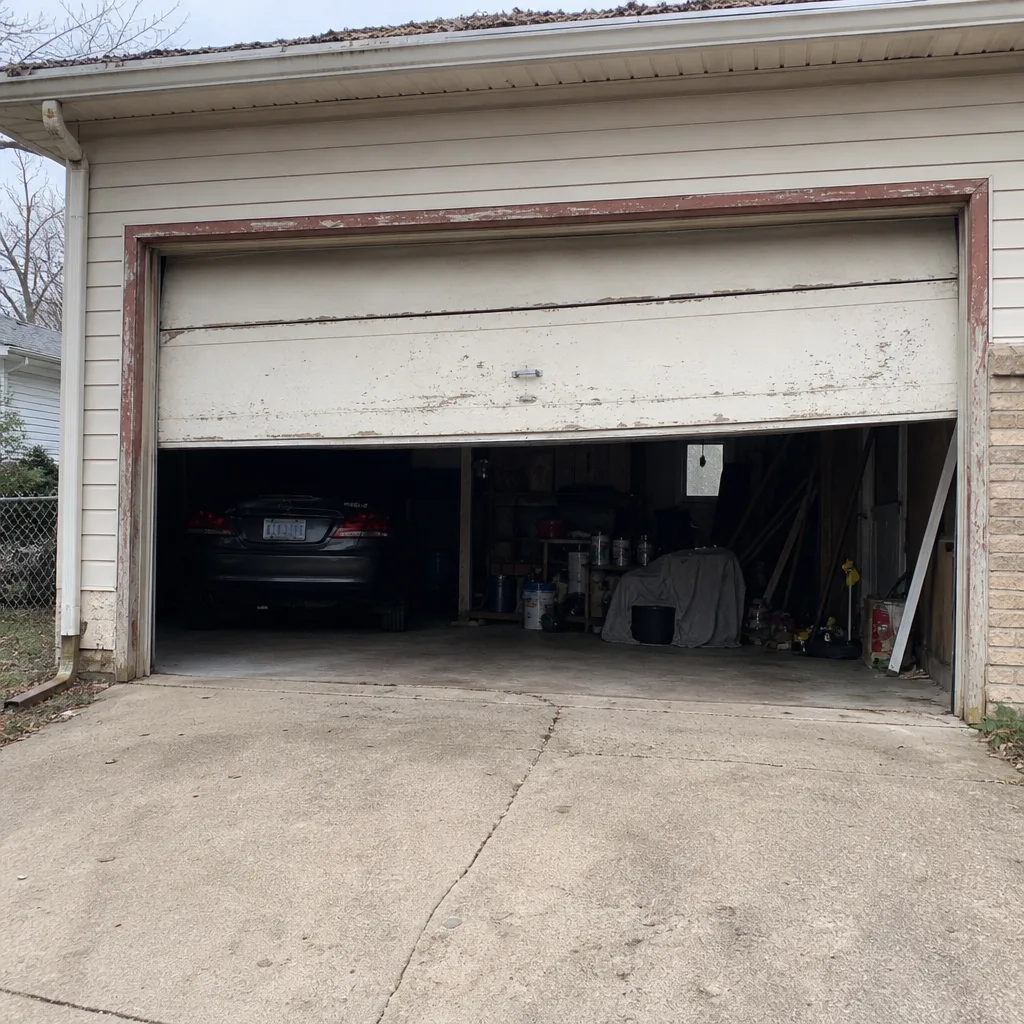 Before
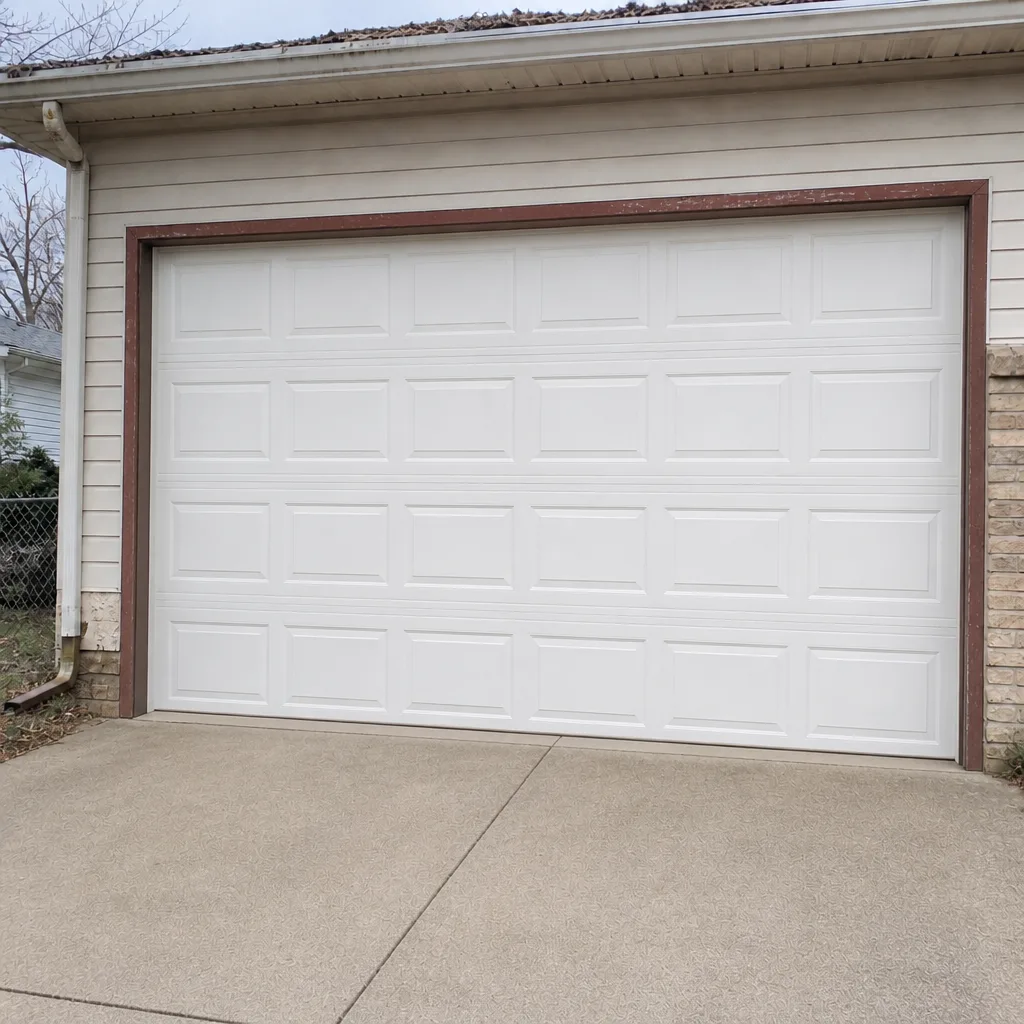 After
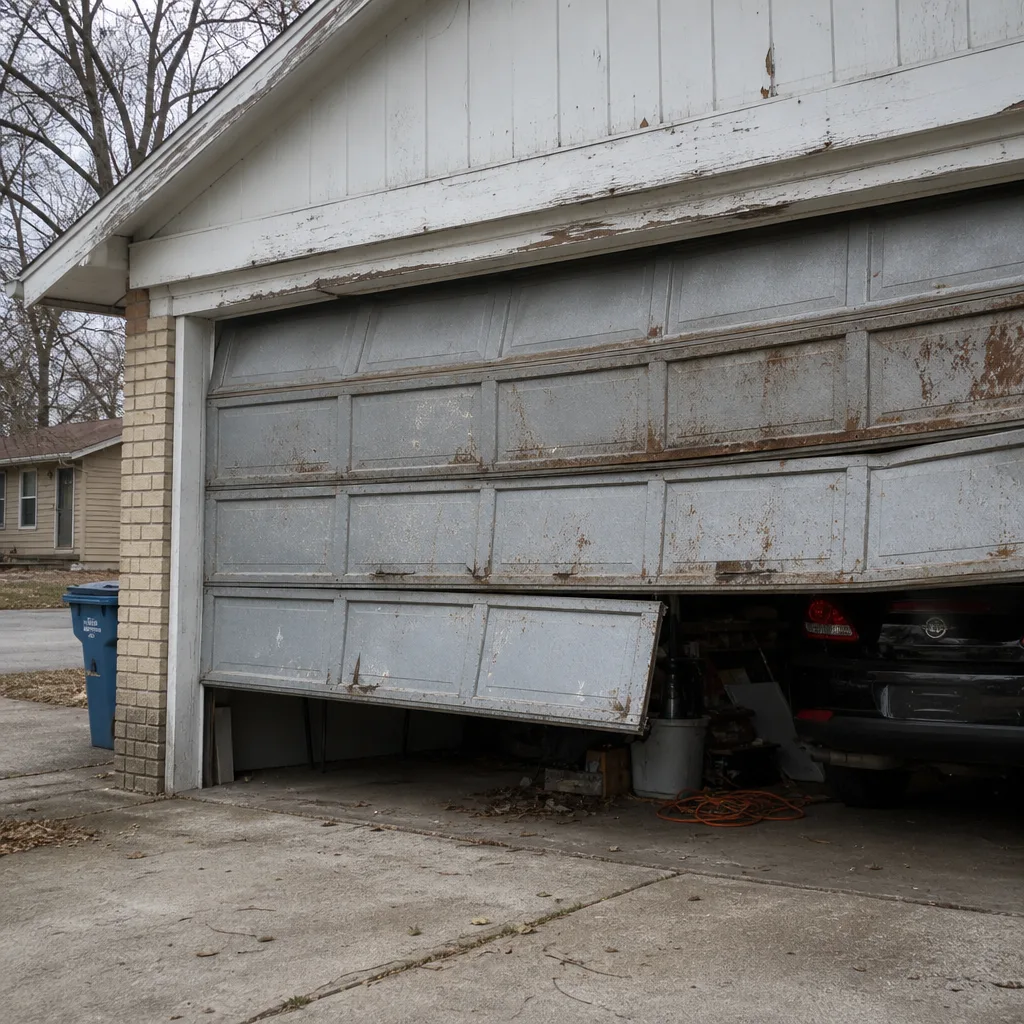 Before
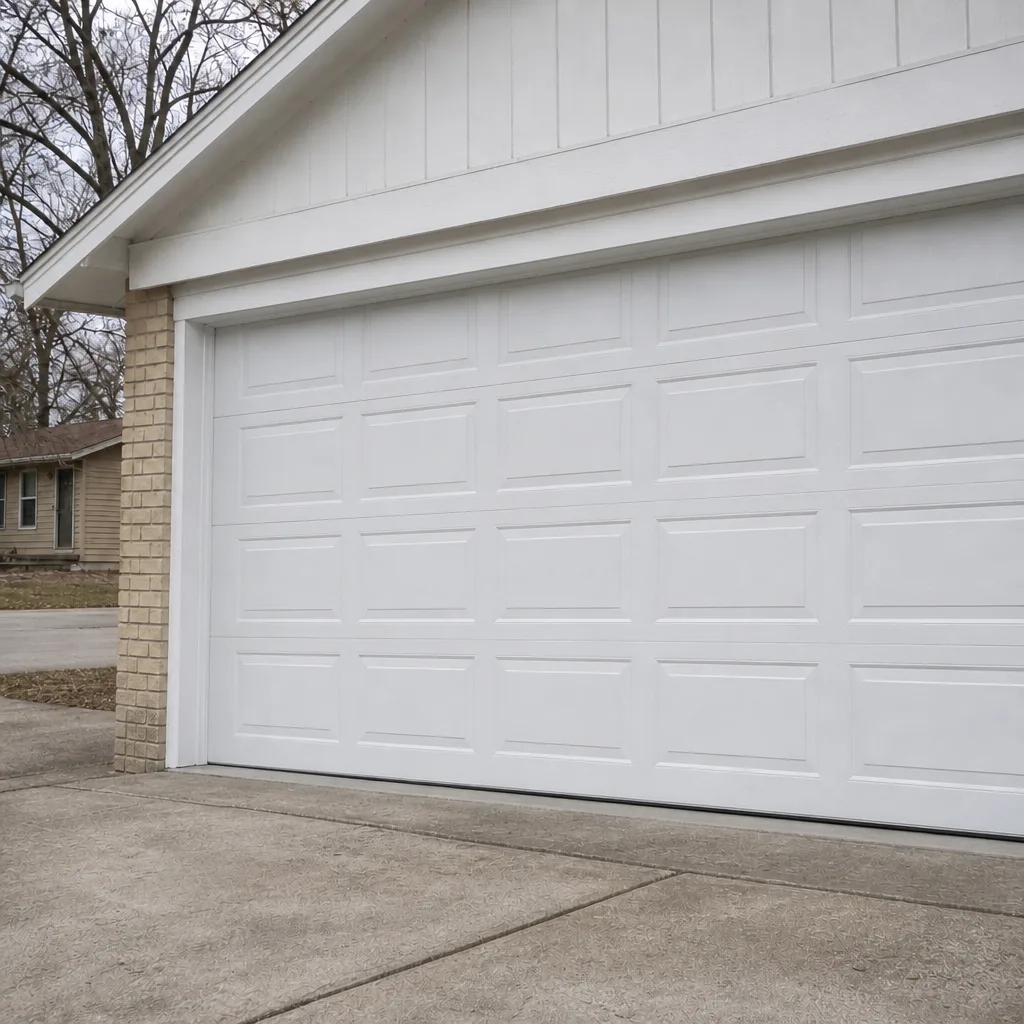 After
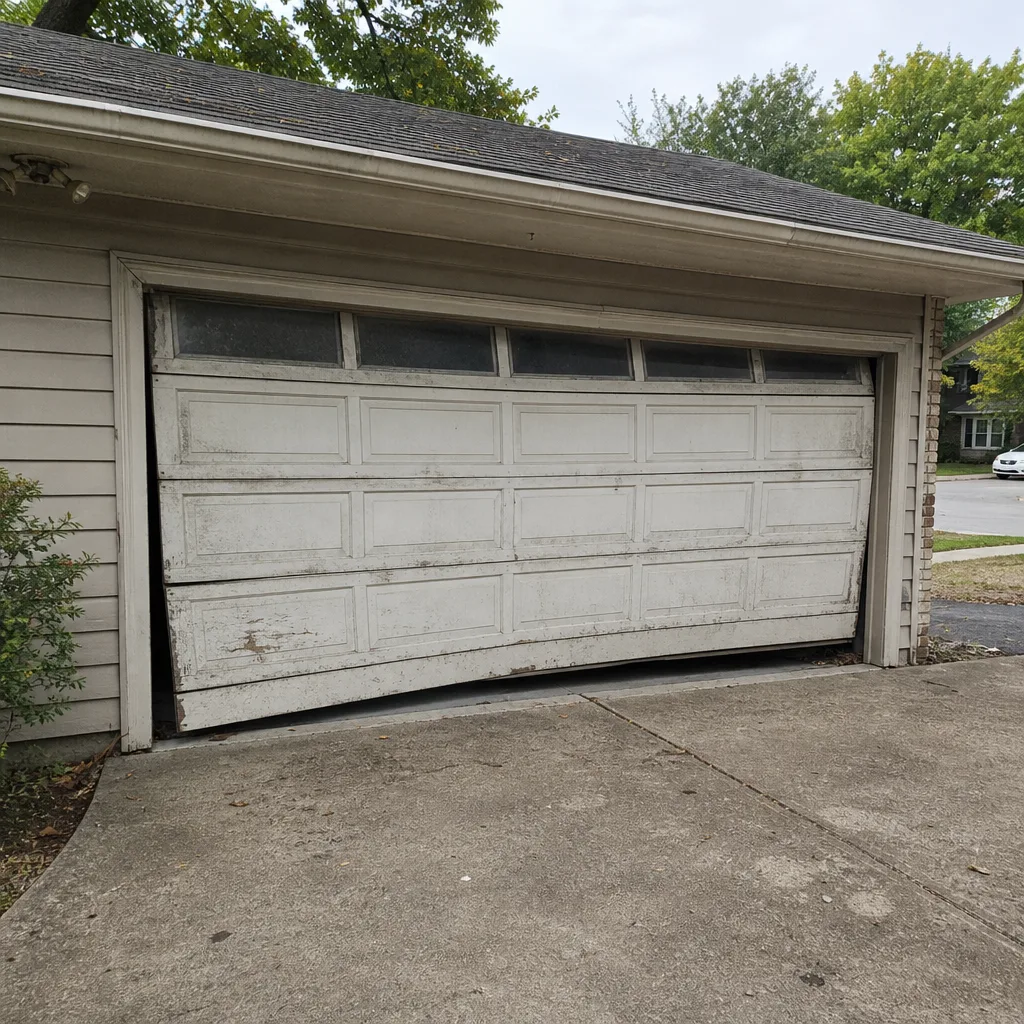 Before
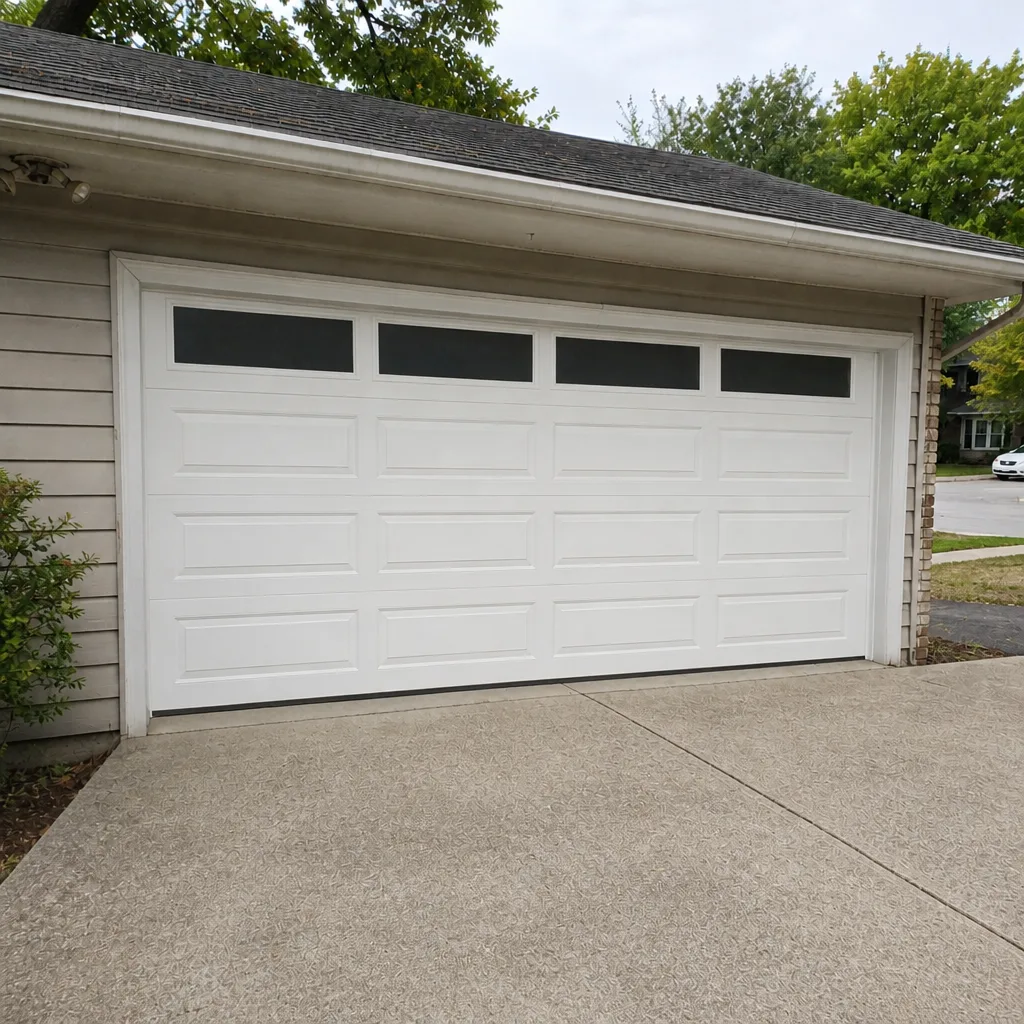 After
When to Call a Professional
Call a professional if any tier-one sign is present: a bang followed by a slack door, a broken spring, a hanging cable, or a door that closes crooked and won’t reverse. Call for tier-two signs too, if two or more are showing at once or the symptom is worse than it was last week. Fair warning on the DIY side: replacing a torsion spring or adjusting a cable is not a home project. The stored energy in a wound spring is enough to cause serious injury, and the tools and technique are specific. Visual inspection and lubrication are fine. Everything past that belongs to a technician. Garage Door Repair Bevo Mill offers free estimates in Bevo Mill. Call (844) 734-5652 and we’ll name the fix and quote the price before any work starts.
Frequently Asked Questions
A loud bang from the garage followed by a door that suddenly feels very heavy, or a visible gap in the torsion spring coil. Both mean a spring has failed, and the door should not be operated. Call (844) 734-5652 and keep the door closed until a technician arrives. The price is quoted and agreed before any work starts.
Single-spring replacement typically runs $180 to $340, and a matched pair usually costs about twice that since it’s one spring price times two. That estimate covers the spring, labor, and balance adjustment. Call (844) 734-5652 for a free estimate. The written quote is the price.
Sometimes, yes. If you describe the sound and where it comes from, our technicians can often place it in tier one, two, or three in a two-minute call. The balance test above is even faster and gives you the same answer. Either way, call us and we’ll help triage it. Estimates are free.
Heat thins the lubricant on hinges and roller stems, so a door that was quiet in spring starts squealing as the temperature climbs. Re-lubricate the hinge knuckles and rollers with a proper garage door lubricant and recheck in a week. If the noise returns quickly, a roller or hinge may need replacing.
Almost always, yes. That’s the balance test telling you the springs have lost tension. It’s tier two, so schedule within a week and stop using the automatic opener until it’s checked. Door balance problems usually worsen over weeks. Call (844) 734-5652 to book a free estimate.
Yes. We work on LiftMaster, Chamberlain, Genie, Clopay, Amarr, Wayne Dalton, Craftsman, and Raynor equipment. Springs, openers, panels, full doors: one call covers it. Call (844) 734-5652 for a free estimate, and the price is quoted before any work starts.
The Bottom Line
Warning signs only help if you place them in the right tier. A grinding noise is fine to operate through when the sound comes from dry rollers; the same noise from the torsion bar means stop. A single squeal is maintenance. A slow reversal on close, an uneven gap at the bottom, or a door that drifts down halfway is your springs telling you they’ve weakened. Run the 60-second balance test whenever you’re unsure. It’s the fastest way to move a symptom from “I hope that’s nothing” to a specific, actionable answer. And if you can’t tell the difference, call. Triage is what we do. For repair, opening, or replacement work in Bevo Mill, our team can help. Call (844) 734-5652 for a free estimate, or read more about garage door installation if you’re considering a full replacement. Springs, openers, panels, full doors: one call covers it.
Written by the team at Garage Door Repair Bevo Mill.