Last updated November 23, 2026
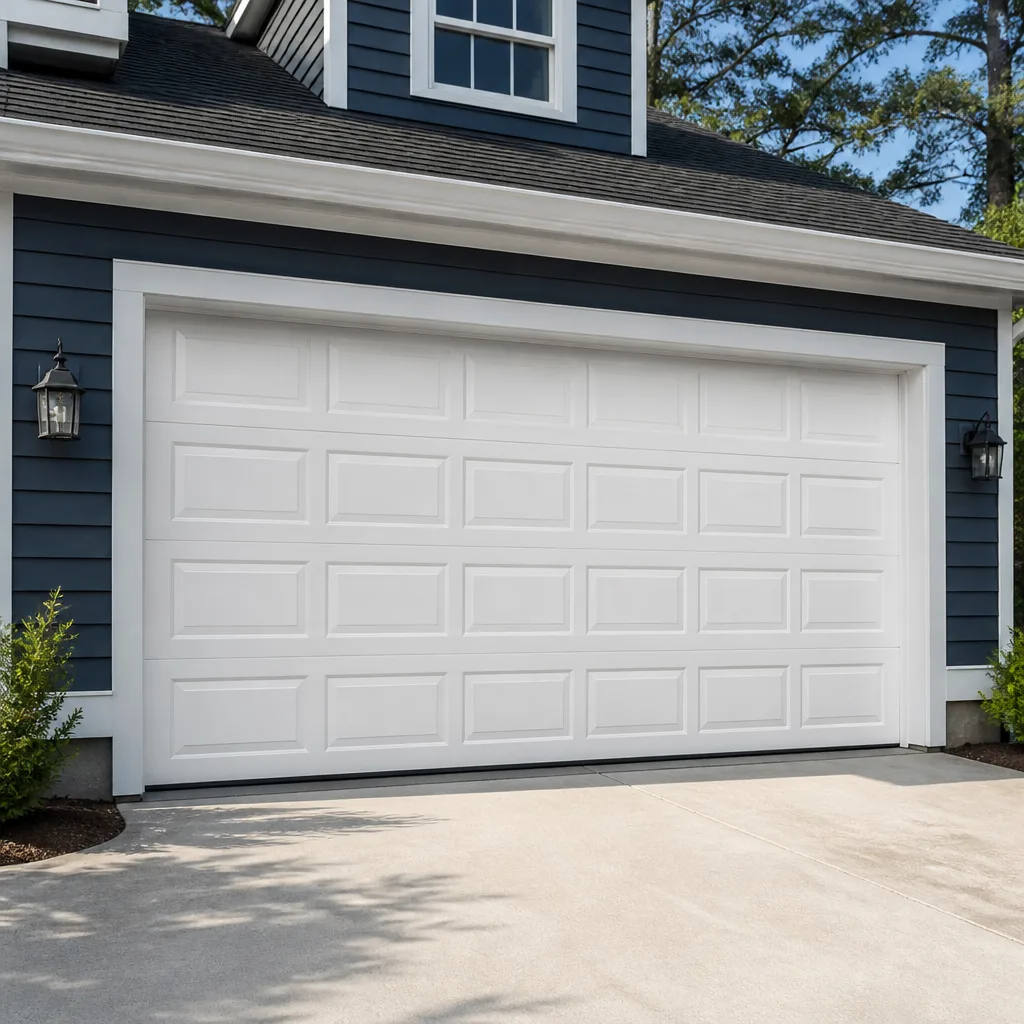 Raised-panel steel
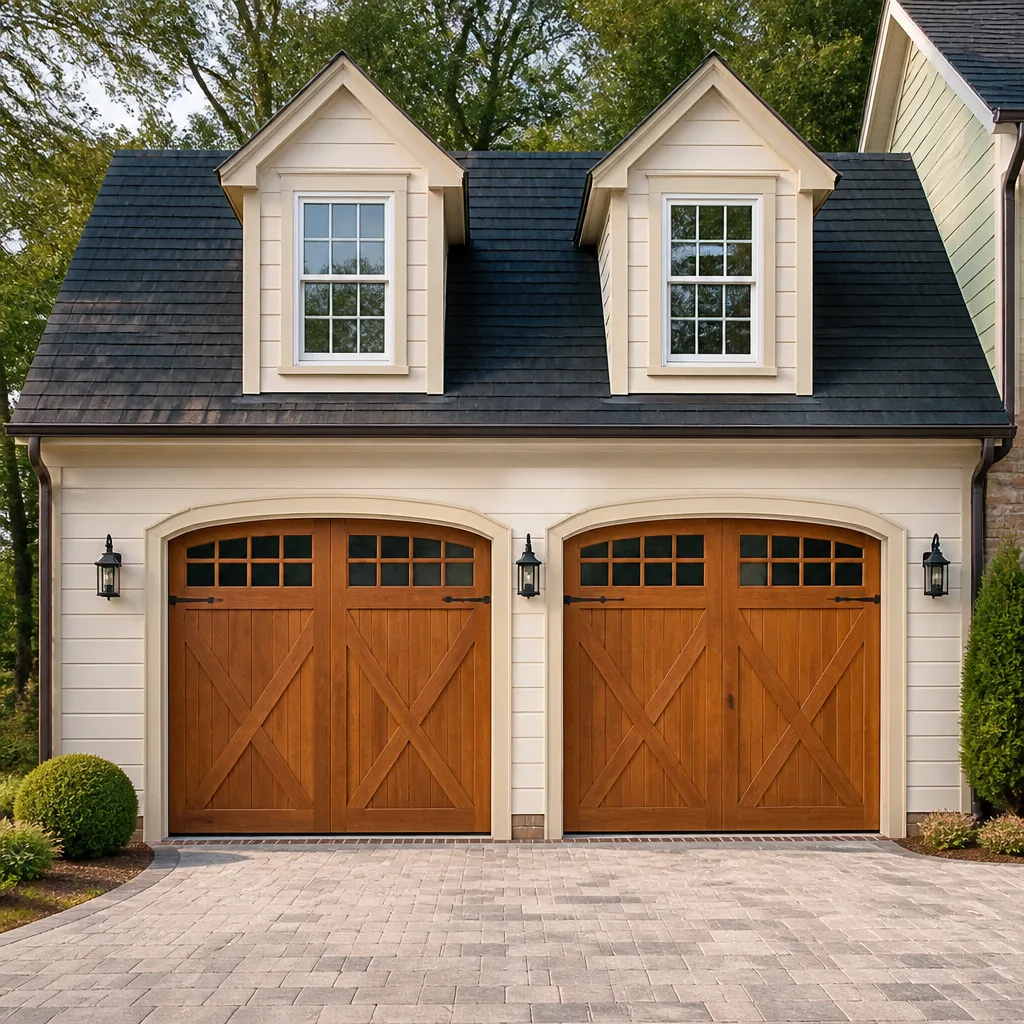 Carriage house
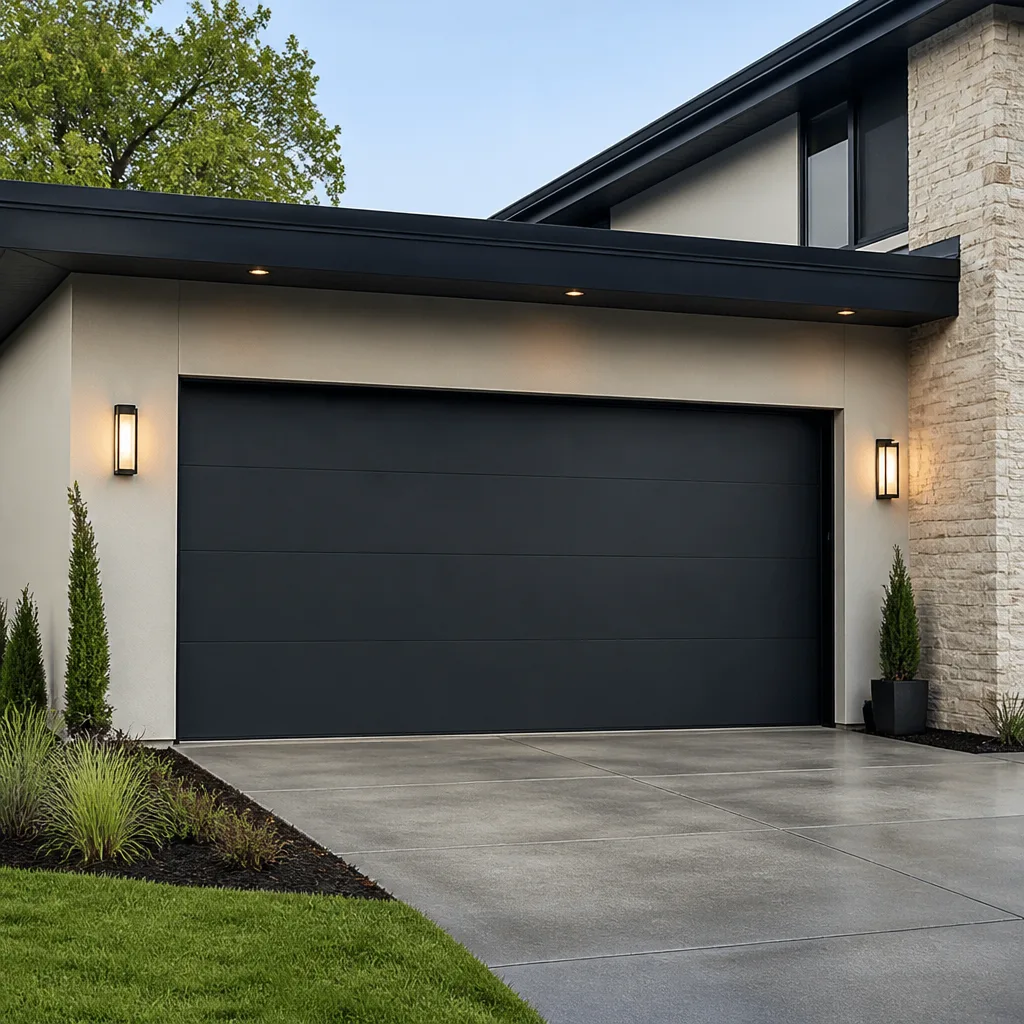 Modern flush
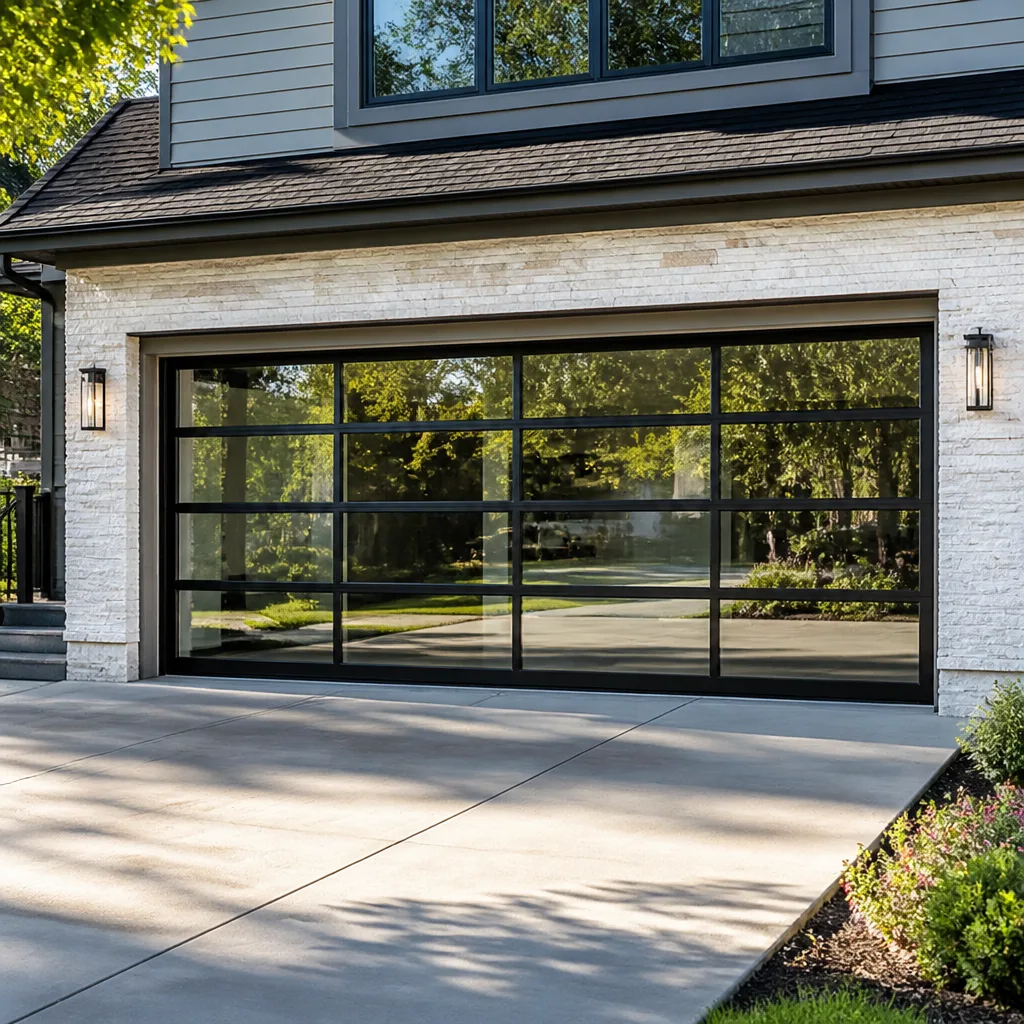 Full-view glass
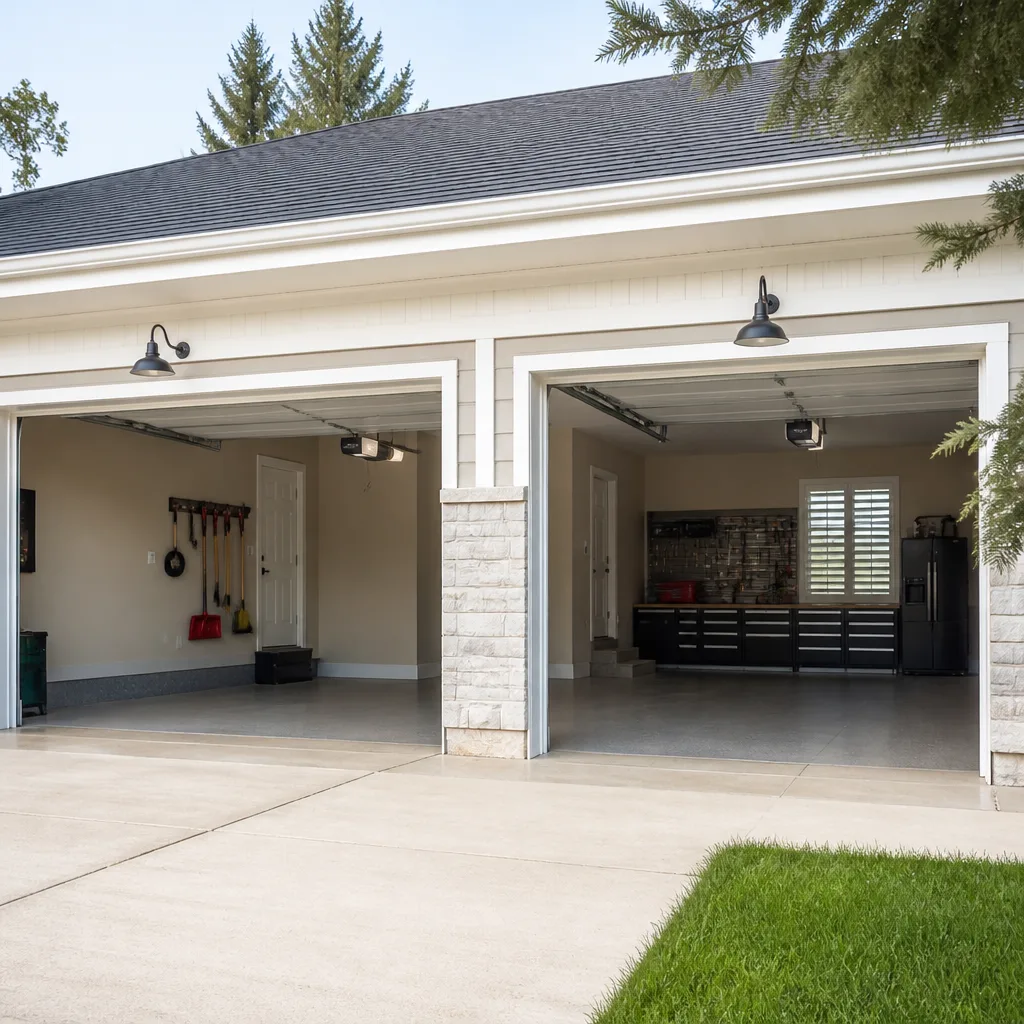 LiftMaster openers
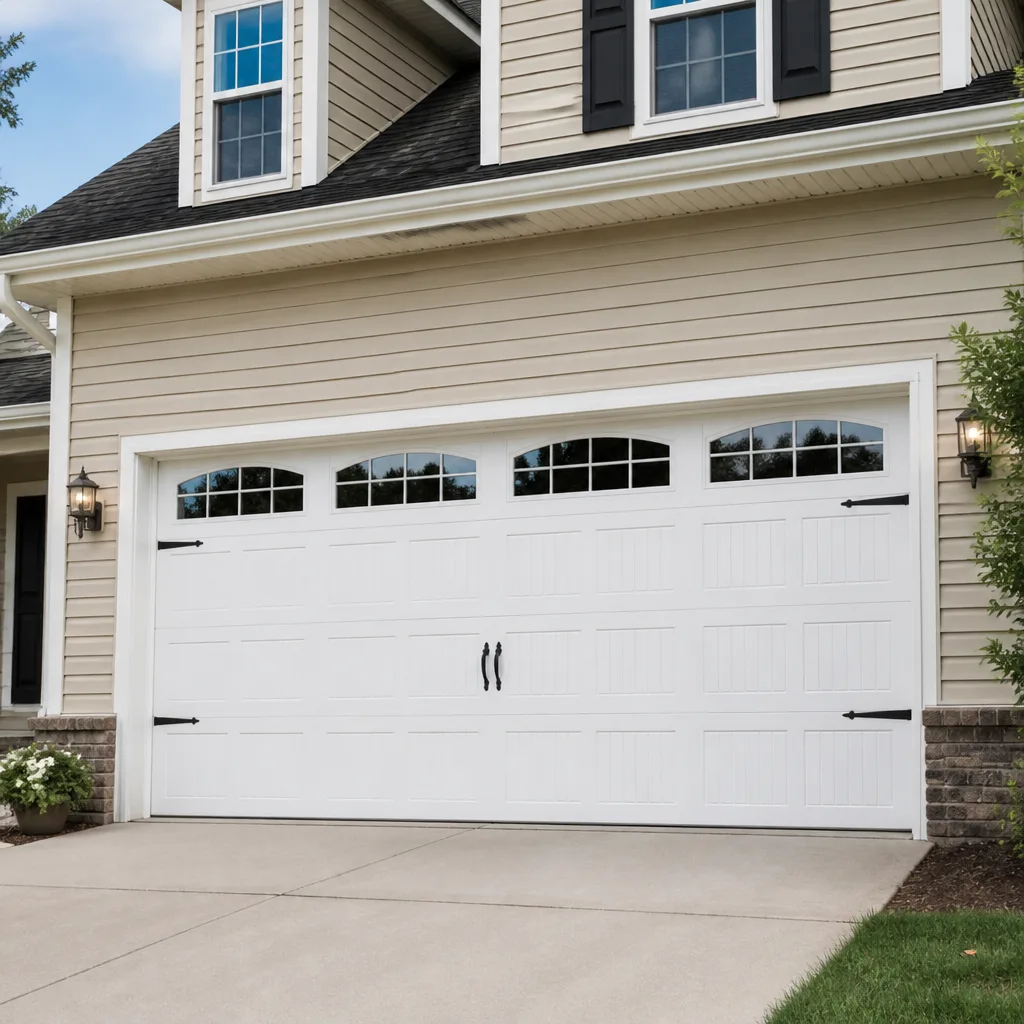 Chamberlain openers
Full 25-point door and opener safety check with every visit - springs, cables, rollers, tracks, and your LiftMaster or Chamberlain opener included
You get a price before we start. It does not change when the pro arrives.
Get your free estimateHow to Hire a Garage Door Contractor in Bevo Mill: A Step-by-Step Guide
Any contractor can pass a Google search. The real filter is asking three technical questions before they touch your door, and knowing whether their answers make sense. Most homeowners in Bevo Mill shop on price and availability, which is exactly backwards. A wrong spring weight or a mismatched opener setup can cost you more in the first year than the difference between two quotes. This guide gives you the questions, the credential checks, the red flags, and the quote-comparison method that turn a stressful hire into a twenty-minute decision.
Quick Answer
Hire a garage door contractor in Bevo Mill by verifying three things before you book: that they can name the spring type and cycle rating your door needs, that they explain what their insurance and licensing actually cover, and that their written quote lists parts, labor, and warranty separately. Then compare quotes line by line rather than by the bottom number. A contractor who answers the technical questions clearly and puts everything in writing is the one to hire.
Styles & brands we work with
- Raised-panel steel
- Carriage house
- Modern flush
- Full-view glass
- LiftMaster openers
- Chamberlain openers
Table of Contents
- The Three Technical Questions to Ask Before You Hire
- What “Licensed and Insured” Actually Means for Garage Door Work in Missouri
- Red Flags Specific to Garage Door Contractors
- How to Compare Quotes When Line Items Are Described Differently
- What a Legitimate Warranty Covers – and What It Usually Excludes
- Bevo Mill Factors That Affect Your Hire
- A Step-by-Step Hiring Process
- Common Mistakes to Avoid
The Three Technical Questions to Ask Before You Hire
These three questions separate a garage door specialist from a generalist with a ladder. You don’t need to know the answers yourself. You need to hear whether the person on the phone does.
Question 1: What spring type does my door use, and why does it matter?
Torsion springs mount above the door on a shaft; extension springs run along the tracks on either side. The two fail differently and get priced differently. A knowledgeable contractor asks about your door’s weight and height before quoting, because spring wire gauge and length are matched to the door, not picked off a shelf. If someone quotes a spring price without asking about your door at all, that’s a guess, not an estimate. Our own garage door repair work starts with identifying the spring system before any number gets discussed.
Question 2: What cycle rating are you quoting?
Springs are rated in cycles – one cycle is one open and one close. Standard springs carry a lower rating; high-cycle springs cost more and last longer. A contractor who can tell you which rating they’re quoting, and why they’d recommend one over the other for your door’s weight class, is quoting a part. One who can’t is quoting a price. Ask directly: “What cycle rating is that spring?” The answer should come without hesitation.
Question 3: Will this opener work with my existing system?
Openers, remotes, wall controls, and safety sensors have to talk to each other. If you have a LiftMaster or Chamberlain unit, a replacement opener and its accessories need to be compatible with what’s already wired in your garage, or the job grows. Ask whether they’ll check compatibility before ordering. A contractor who says they’ll confirm the model and wiring first is being honest; one who promises a perfect fit sight unseen is guessing.
What “Licensed and Insured” Actually Means for Garage Door Work in Missouri
“Licensed and insured” is a phrase every contractor uses, and on its own it tells you almost nothing. Missouri does not issue a statewide license for garage door contractors the way it does for some other trades. Local requirements vary, so the honest answer in Bevo Mill is: ask what specifically they hold, and ask for proof. What matters is the substance behind the words.
- General liability insurance. This covers damage to your property if something goes wrong – a dented panel, a cracked window, a scuffed car. Ask for a certificate of insurance and confirm the dates are current.
- Workers’ compensation. If someone gets hurt on your property, this is the coverage that matters. Ask whether the people doing the work are covered.
- Business registration. A registered business entity is easier to hold accountable than a name and a phone number.
- Manufacturer authorization. For opener work in particular, authorized dealer status can matter for warranty claims. Ask whether they’re authorized for your brand.
When we connect you with a local professional, that pro is licensed and insured as their state requires. Ask the same question of every contractor you consider, and don’t accept “we’re fully licensed” as a complete answer. The specifics are the point.
Red Flags Specific to Garage Door Contractors
Garage door work has its own warning signs. These come up often enough that they’re worth memorizing before you make any calls in Bevo Mill.
Vague spring quotes
“Springs, around two hundred” is not a quote. It doesn’t say how many springs, what type, what cycle rating, or whether labor is included. A real quote names the part and the count. Remember that a spring price is for one spring; a matched pair is usually replaced together, and a pair costs roughly twice a single spring. Anyone quoting one price for “the springs” without saying how many is leaving room to change the number later.
Pressure to replace instead of repair
Sometimes replacement is the right call. But you should hear why: age, damage, structural failure, or a repair that would cost nearly as much as a new door. If the recommendation arrives before any diagnosis, it’s a sales pitch, not an assessment. Ask what specifically failed and what a repair would involve.
Unmarked vehicles and no verifiable business identity
Not every legitimate contractor drives a wrapped truck – and we don’t claim to operate a fleet of them. But you should be able to verify a business name, a working phone number, and a written estimate. A cash-only, no-paperwork operation leaves you with no recourse if the door fails a month later.
No written estimate
An estimate you can’t hold in your hand isn’t an estimate. Verbal pricing is where “the price changed once we saw it” starts. On a spring job especially, the written number should be agreed before any work starts.
Unwillingness to name the brand they service
If you own a Clopay door or a Genie opener and the contractor gets fuzzy about parts availability, that’s a delay waiting to happen. A specialist knows the common brands and can source parts for them.
How to Compare Quotes When Line Items Are Described Differently
Two quotes for the same job can look like different jobs. One lumps everything into a single number; the other lists parts, labor, disposal, and tax separately. To compare fairly, rebuild each quote into the same categories before you decide.
- Normalize the parts line. Write down the exact part, count, and rating – for example, “two torsion springs, matched pair, high-cycle.” If a quote can’t be broken down this far, mark it as incomplete.
- Separate labor. Is installation labor included in the part price or billed on top? Ask directly.
- Check what happens to the old parts. Spring and opener removal is part of the job. Confirm whether disposal is included.
- Confirm the warranty terms in writing. A quote without warranty language is a quote for the install only.
- Compare like scopes. If one contractor quoted a repair and another quoted a full replacement, you’re comparing two different projects. Ask both to price the same scope.
- Look at the total, then the risk. The cheapest total with no written warranty and no named parts is usually the most expensive choice over time.
When we quote spring work, the price you agree to before the work starts is the price on the invoice. That’s the standard to hold every contractor to in Bevo Mill.
What a Legitimate Warranty Covers – and What It Usually Excludes
A warranty is only useful if you know its shape before you sign. Garage door warranties generally split into two parts: parts coverage and labor coverage. They’re rarely the same length, and the exclusions matter as much as the term.
What parts warranties typically cover
- Manufacturing defects in springs, openers, panels, and hardware
- Premature failure of a part within its rated life
- Sometimes a replacement part itself, but not the labor to install it
What they typically exclude
- Labor to remove and reinstall a failed part, unless labor coverage is stated separately
- Damage from misuse, impact, or a door that was run with a known problem
- Wear items like rollers and cables, which are consumed by normal use
- Consequential damage – for example, a failed opener that damaged the door
Ask two questions of every contractor: “How long is the parts warranty, and how long is the labor warranty?” If the answer is a single vague number, ask them to break it apart. Get it in the written estimate. A warranty you can’t read is a warranty you can’t use.
Bevo Mill Factors That Affect Your Hire
Bevo Mill is a south-city St. Louis neighborhood with a lot of older housing stock, and that shapes garage door work here in specific ways. Many homes in the area have detached or rear-alley garages, and a good share of those doors are older models still running on original hardware. That means spring replacement and opener modernization come up more often than new construction installs.
The housing also matters for sizing. Older garages aren’t always standard width, and a door that was fitted decades ago may need a custom measurement before a replacement is ordered. A contractor who measures before quoting is doing the job right. One who quotes a standard size over the phone is setting up a return visit and a revised price.
St. Louis summers bring heat and humidity, and winters bring freeze-thaw cycles. Those swings are hard on springs, cables, and the lubricant in your tracks and rollers. It’s a reason to have your door’s hardware checked periodically rather than waiting for a failure. It’s also a reason to ask a contractor whether they’ll inspect the full system – springs, cables, rollers, and opener – rather than replacing one part and leaving.
Alley access is another local consideration. If your garage opens onto a narrow rear alley, the contractor needs room to work safely and to stage a door if it’s being replaced. Mention access when you book. A specialist will ask; a generalist may not.
For a shop that treats springs as a named service rather than a footnote, this neighborhood’s mix of older doors and original hardware is familiar territory. That’s the point of hiring a specialist in Bevo Mill instead of a general handyman.
A Step-by-Step Hiring Process
Here’s the sequence we’d suggest to any homeowner in Bevo Mill, whether the door is dead in the up position or you’re planning ahead.
- Identify your door and opener brands. Look for a label on the door’s inner panel and on the opener motor housing. Note the brand – Clopay, LiftMaster, Chamberlain, Genie, and others are common. Having this ready saves time on every call.
- Describe the symptom, not the diagnosis. “The door goes up six inches and stops” is more useful than “I think the spring is broken.” Let the contractor diagnose.
- Ask the three technical questions. Spring type, cycle rating, and opener compatibility. Listen for specifics, not reassurance.
- Request a written estimate. It should name the parts, the count, the labor, and the warranty. Compare it against the next quote using the categories above.
- Confirm the credentials. Ask for proof of insurance and business registration. Confirm who’s actually doing the work.
- Agree the price before work starts. Get the final number in writing and confirm no additional charges will be added without your approval.
- Keep the paperwork. Save the estimate, the invoice, and the warranty terms. You’ll want them if a part fails.
For a full replacement rather than a repair, the process is similar but the timeline is longer. Doors are measured, ordered, and scheduled. Our garage door installation work follows the same rule: a free measure and a written price before anything is ordered.
Common Mistakes to Avoid
- Hiring on price alone. The lowest quote is often the one missing a line item. Compare scopes, not totals. In Bevo Mill’s older housing stock, a cut-rate quote may also be a standard-size assumption that doesn’t fit your garage.
- Accepting a verbal estimate. Get every number in writing before work starts. If a contractor won’t put it on paper, that’s your answer.
- Not asking how many springs the price covers. A spring quote is for one spring. A matched pair is usually replaced together, so a pair costs about twice a single spring. Confirm the count in the quote.
- Assuming “licensed and insured” is the whole check. In Missouri, ask what the license and insurance actually cover. Request a certificate of insurance and confirm it’s current.
- Skipping the warranty questions. Parts and labor warranties are different, and exclusions matter. Read the terms before you authorize the work.
- Letting someone diagnose over the phone. A real quote requires seeing the door, the spring system, and the opener. Phone-only pricing leaves room for surprises.
- Ignoring the rest of the system. A new spring on worn cables and dry rollers will fail again. Ask for a full inspection of springs, cables, rollers, and opener.
See the difference
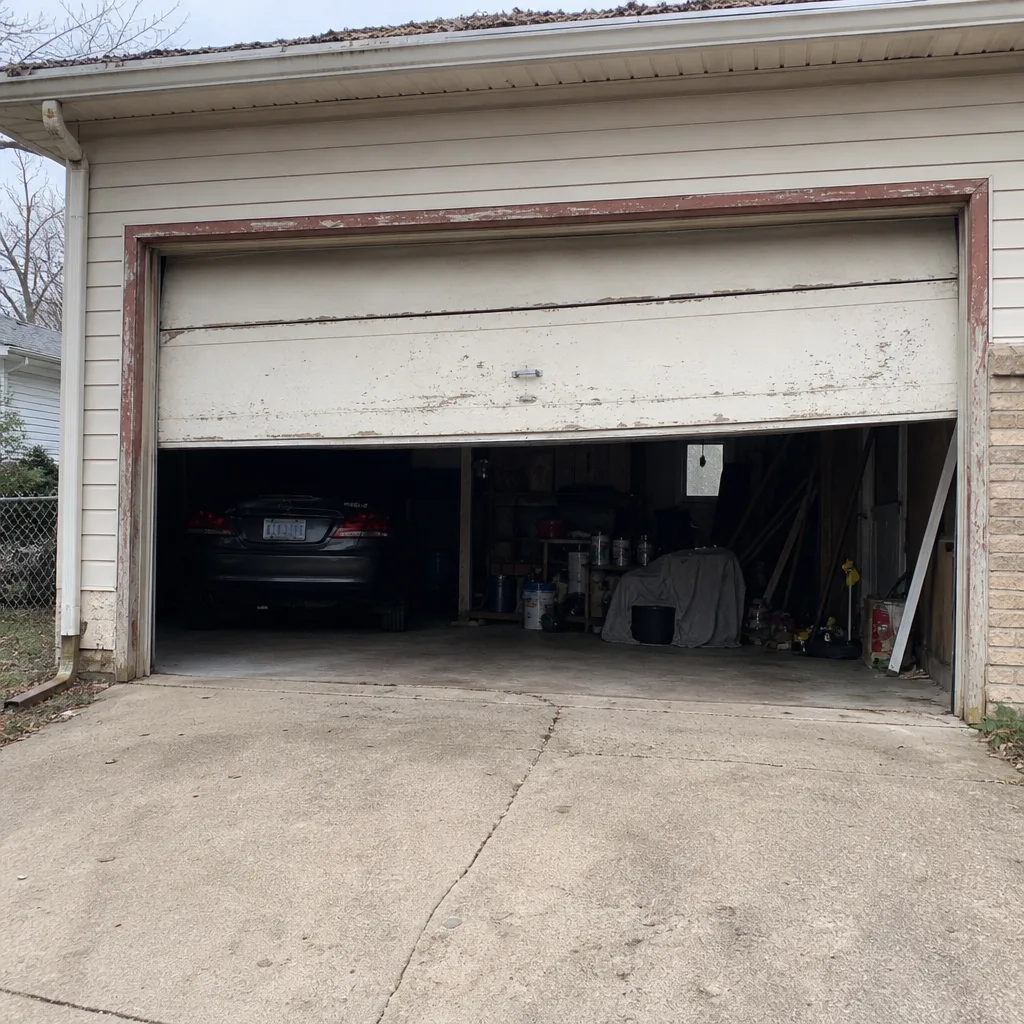 Before
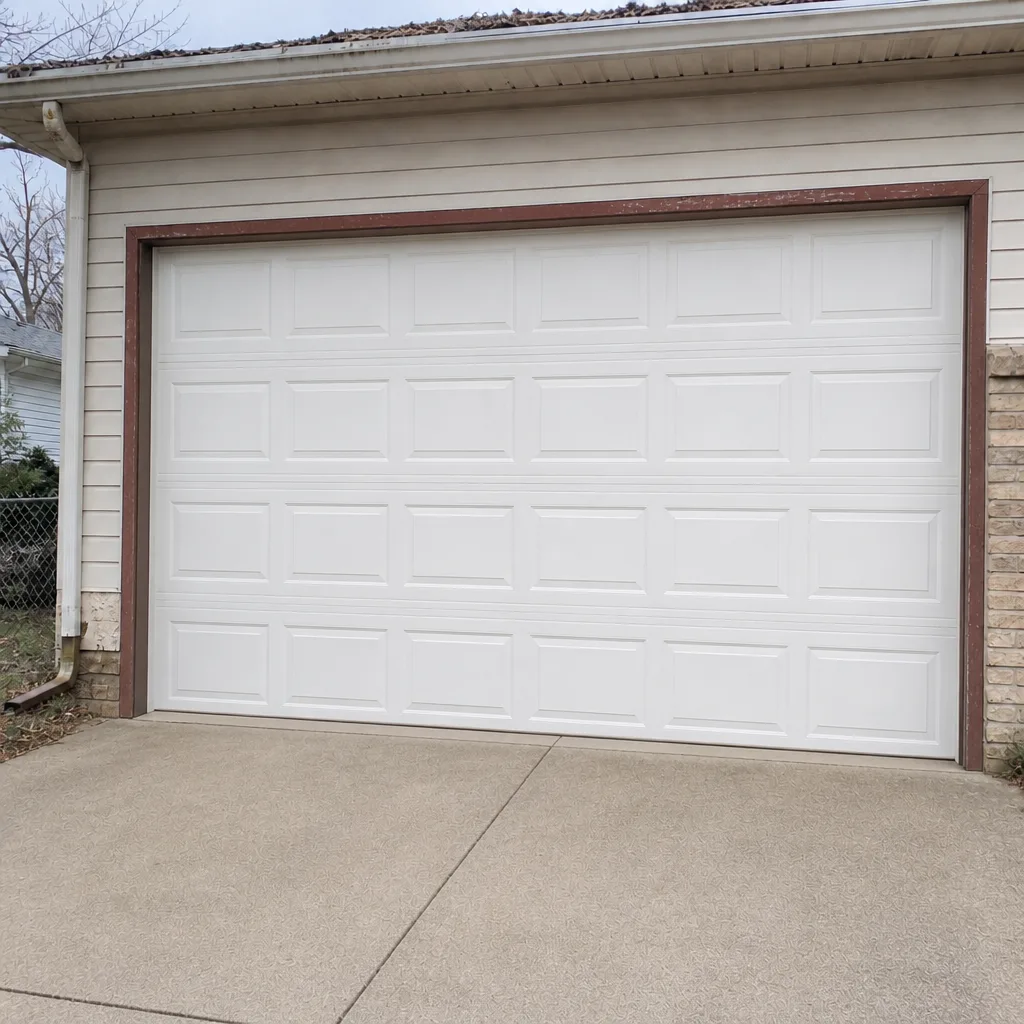 After
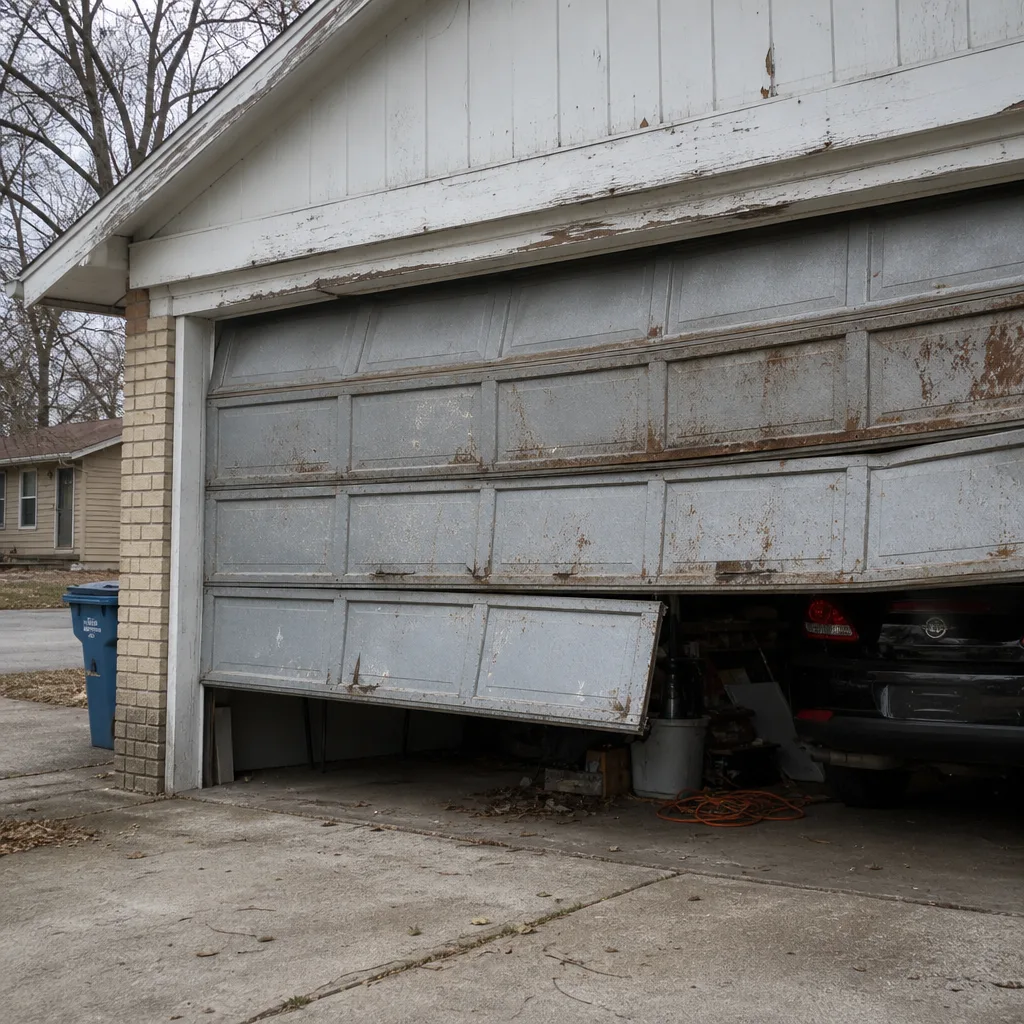 Before
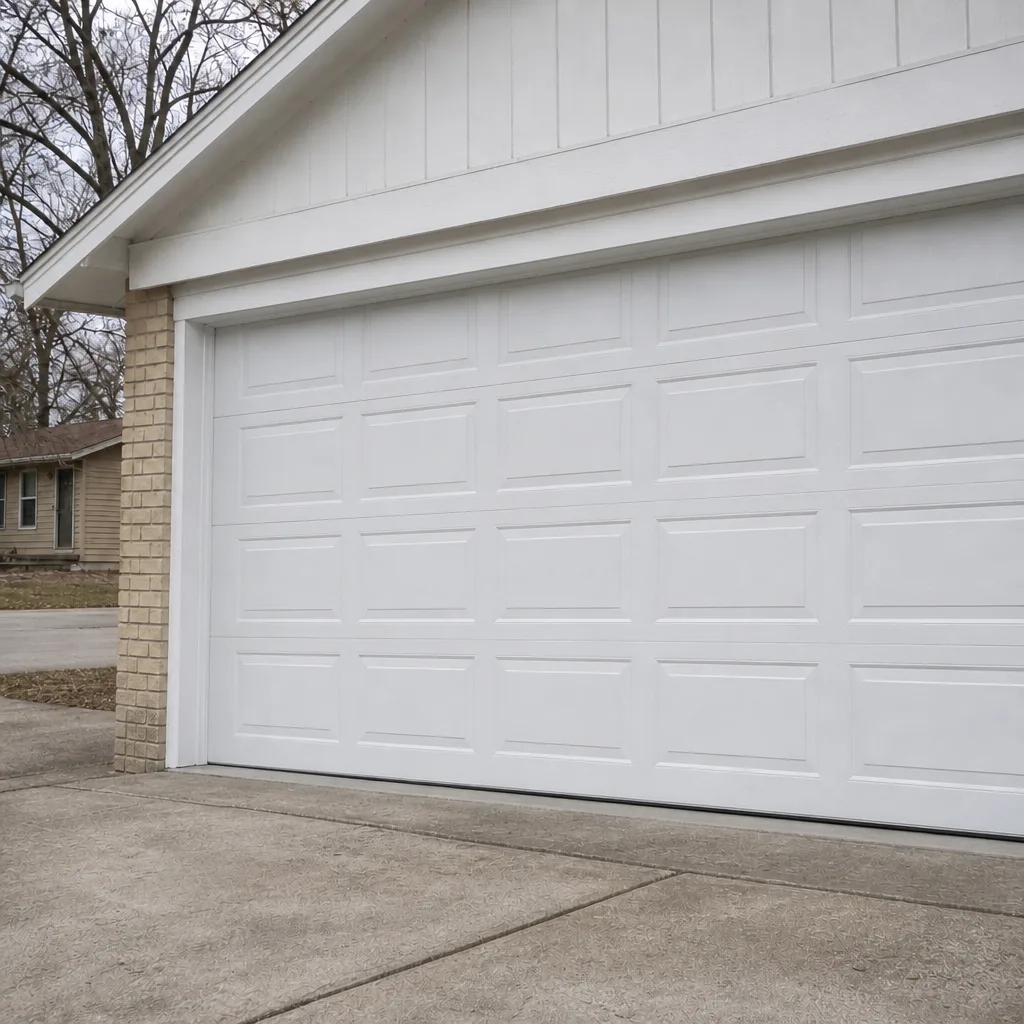 After
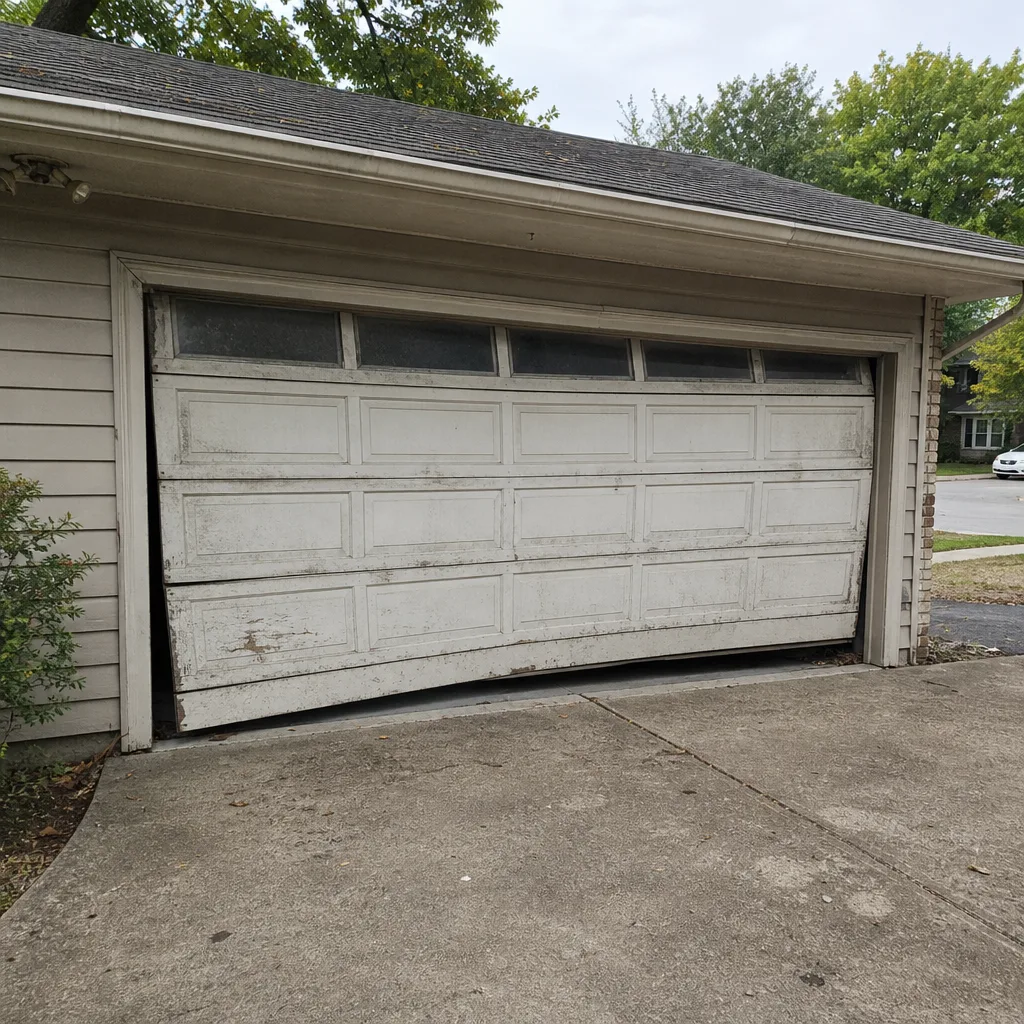 Before
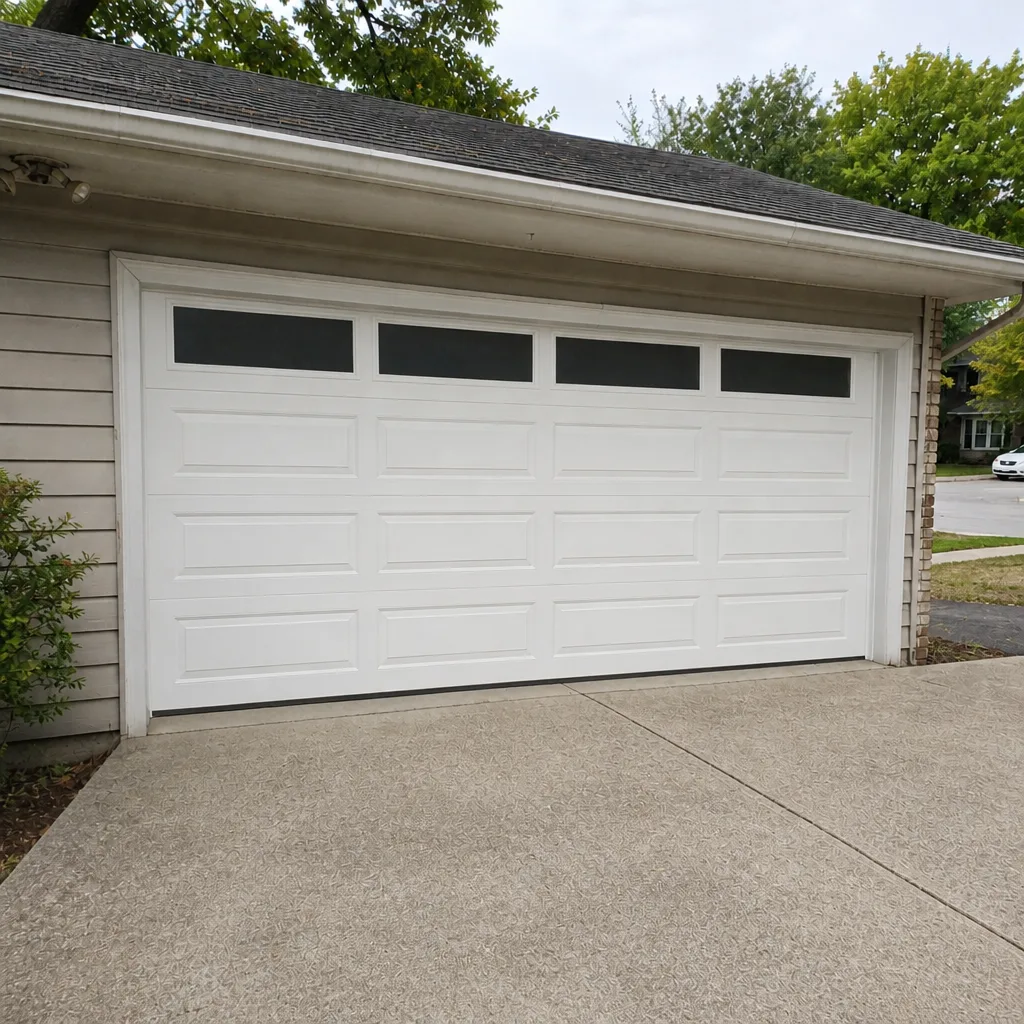 After
When to Call a Professional
Some garage door problems are a nuisance. Others are genuinely dangerous. High-tension springs and cables store enough energy to cause serious injury – never attempt to adjust, remove, or replace them yourself. Call a trained professional for that work, every time. Same for electrical work on an opener that’s tripping a breaker, and for gas lines if your garage shares a wall with an appliance.
Call a professional when the door won’t open or close fully, when you hear a loud snap from overhead, when the door hangs crooked, when the opener runs but the door doesn’t move, or when the safety sensors won’t stay aligned. For a door that’s visibly damaged or off its tracks, stop using it – a door that comes down unevenly can be a real hazard.
Garage Door Repair Bevo Mill offers free estimates in Bevo Mill – call (844) 734-5652. We work on the brand you already have, and the price is quoted and agreed before any work starts.
Frequently Asked Questions
Spring replacement is priced per spring, so a single spring and a matched pair are quoted separately – a pair costs roughly twice a single spring. The exact price depends on the spring type, cycle rating, and door weight, so the written estimate is the number that counts. Call (844) 734-5652 for an exact quote – estimates are free.
Missouri does not issue a single statewide license for garage door work, and local requirements vary, so you should ask each contractor what they specifically hold and for proof. What matters is general liability insurance, workers’ compensation, and a verifiable business identity. Ask for a certificate of insurance and confirm the dates are current. Call (844) 734-5652 with questions about what we verify.
It shouldn’t if the estimate was written after a real inspection. The written quote is the price, and any additional work should be discussed and agreed before it starts. That’s why a phone estimate without seeing the spring system is a guess – a measured quote is the one to trust. Call (844) 734-5652 for a written estimate.
You can, but it’s rarely the right call. Matched springs wear together, so replacing one on an older pair leaves you with uneven tension and a second failure likely soon after. Most specialists recommend replacing the pair. Your technician should explain the tradeoff for your specific door before you decide. Call (844) 734-5652 to talk it through.
A specialist should handle the brands actually installed in homes, which includes LiftMaster, Chamberlain, Genie, Clopay, Amarr, Wayne Dalton, Craftsman, and Raynor. If you own one of those, the contractor should be able to name it and source parts without guesswork. Ask which brands they work on when you call.
It will only work if it’s matched to your door’s weight and your existing accessories are compatible. Ask the contractor to confirm the model and check the wiring before ordering. A contractor who wants to inspect first is being honest. Our garage door opener repair work starts exactly there. Call (844) 734-5652 for a compatibility check.
The Bottom Line
Hiring a garage door contractor in Bevo Mill comes down to three things: asking the technical questions, verifying what “licensed and insured” actually means, and comparing written quotes line by line. A contractor who names the spring type, the cycle rating, and the opener compatibility without guessing is the one to hire. A written quote with parts, labor, and warranty spelled out is the only quote worth comparing. And the price you agree to before work starts is the price you should pay. For a neighborhood with older doors and alley garages, that process matters even more. Call Garage Door Repair Bevo Mill at (844) 734-5652 for a free estimate – tell us the problem, and we’ll name the fix.
Written by the team at Garage Door Repair Bevo Mill.